Government Destroys Over 2,000 Illicit Firearms to Strengthen National Peace and Security
The Government has destroyed more than 2,000 illicit and unregistered firearms as part of efforts to strengthen national security, reduce gun-related violence, and reaffirm Ghana’s commitment to international arms control obligations.
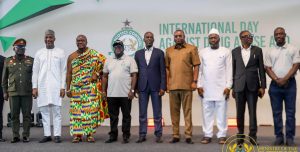
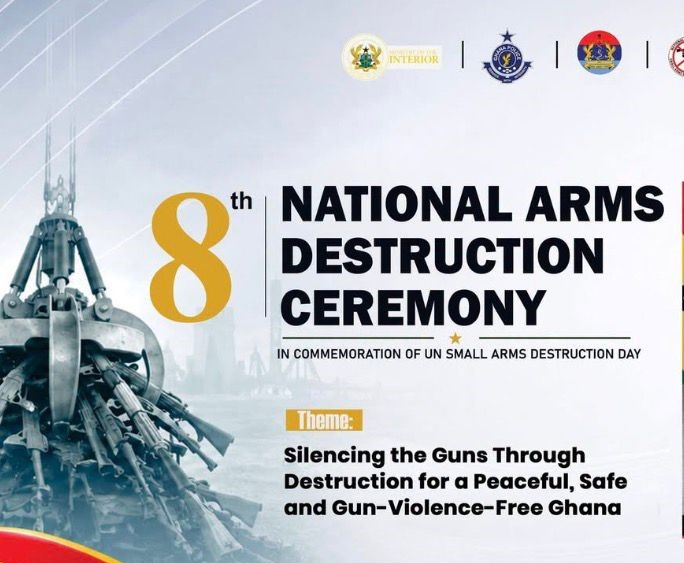
The exercise formed part of the 8th National Arms Destruction Ceremony held on Thursday to commemorate the United Nations International Small Arms Destruction Day under the theme: “Silencing the Guns through Destruction for a Peaceful, Safe and Gun Violence-Free Ghana.”
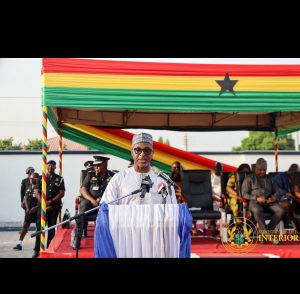
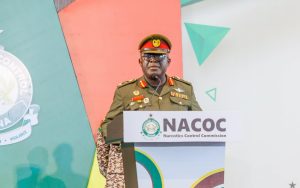
Addressing the ceremony, the Chief of Staff, Julius Debrah, described the destruction of the weapons as a powerful demonstration of the government’s unwavering commitment to protecting lives, preserving peace, and ensuring public safety.
He said the exercise was not merely about destroying firearms but about preventing future acts of violence and ensuring that illicit weapons would never find their way back into society.
“In a few moments, weapons that were once capable of spreading fear, taking lives and destabilising communities will be destroyed. They will not return to our streets, criminal activities or threaten our families, businesses, schools, places of worship and our democratic peace,” he stated.
Mr Debrah noted that the proliferation of illicit arms continued to pose serious threats to peace, security and national development through armed robbery, violent extremism, chieftaincy conflicts, electoral violence and other criminal activities.
The Chief of Staff commended Ghanaians for responding positively to the recently concluded Gun Amnesty Programme, which ran from December 12, 2025, to January 13, 2026.
According to him, the programme allowed individuals possessing illicit and unregistered firearms to voluntarily surrender or regularise them without fear of arrest, interrogation or prosecution.
He stressed that the destruction of the weapons fulfilled Ghana’s obligations under various regional and international arms control instruments, including the ECOWAS Convention on Small Arms and Light Weapons, the United Nations Firearms Protocol, the United Nations Programme of Action on Small Arms and Light Weapons and the Arms Trade Treaty.
He announced that the government had now entered the post-amnesty enforcement phase and warned that individuals who continued to possess firearms illegally would face the full rigours of the law.
The Chief of Staff assured the public that the government would continue to support intelligence-led operations, strengthen border management and enhance collaboration among security agencies to curb illicit arms trafficking.
He further appealed to citizens to support the security agencies by reporting the illegal possession, trafficking and misuse of firearms.
“When the safety of our communities is at stake, silence helps no one. If you see something, say something,” he urged.
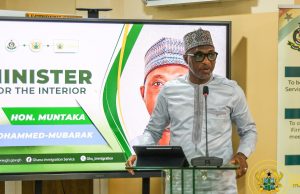
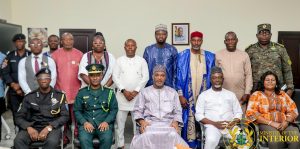
The Minister for the Interior, Mr Muntaka Mohammed-Mubarak, said the destruction exercise demonstrated Ghana’s determination to protect lives, strengthen national security and preserve the peace that had become the country’s hallmark.
The Minister reaffirmed the government’s commitment to strengthening security institutions, improving border control, enhancing intelligence cooperation and intensifying efforts to combat the proliferation of illicit arms and ammunition.
He called on all citizens to remain vigilant and work closely with the security services, stressing that security remained a shared national responsibility.
The Executive Secretary of the National Commission on Small Arms and Light Weapons (NACSA), Dr Adam Bonaa, described the ceremony as another significant milestone in Ghana’s efforts to strengthen arms control and public safety.
He said the destruction exercise followed the successful implementation of the Gun Amnesty Programme undertaken by the Commission in collaboration with the Ministry of the Interior and the Ghana Police Service.
He revealed that, for the first time, Ghana had adopted internationally recognised destruction technology that permanently disabled firearms before recycling them, bringing the country’s weapons disposal practices in line with global standards.
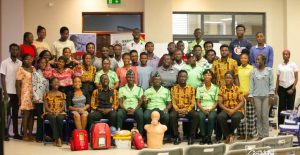
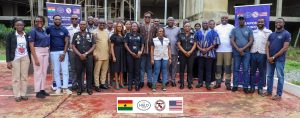
He acknowledged the technical support provided by The HALO Trust and the Government of the United States, which facilitated specialised training for personnel from NACSA, the Ghana Police Service and other security agencies to safely conduct the destruction exercise.
Dr Bonaa reaffirmed the Commission’s commitment to implementing comprehensive strategies that combined public education, research, policy development, stakeholder engagement, border security coordination and international cooperation to combat the proliferation of illicit arms.
Judith Twumwaa, ISD