NDPC seeks China’s partnership to strengthen Ghana’s long-term development planning
The National Development Planning Commission (NDPC) has explored opportunities to deepen Ghana-China relations through technical cooperation in long-term national development planning, policy research and institutional capacity building to strengthen the country’s development framework.
The initiative is expected to complement the two countries’ longstanding trade and economic relations by opening new areas of collaboration in national development planning and policy implementation.
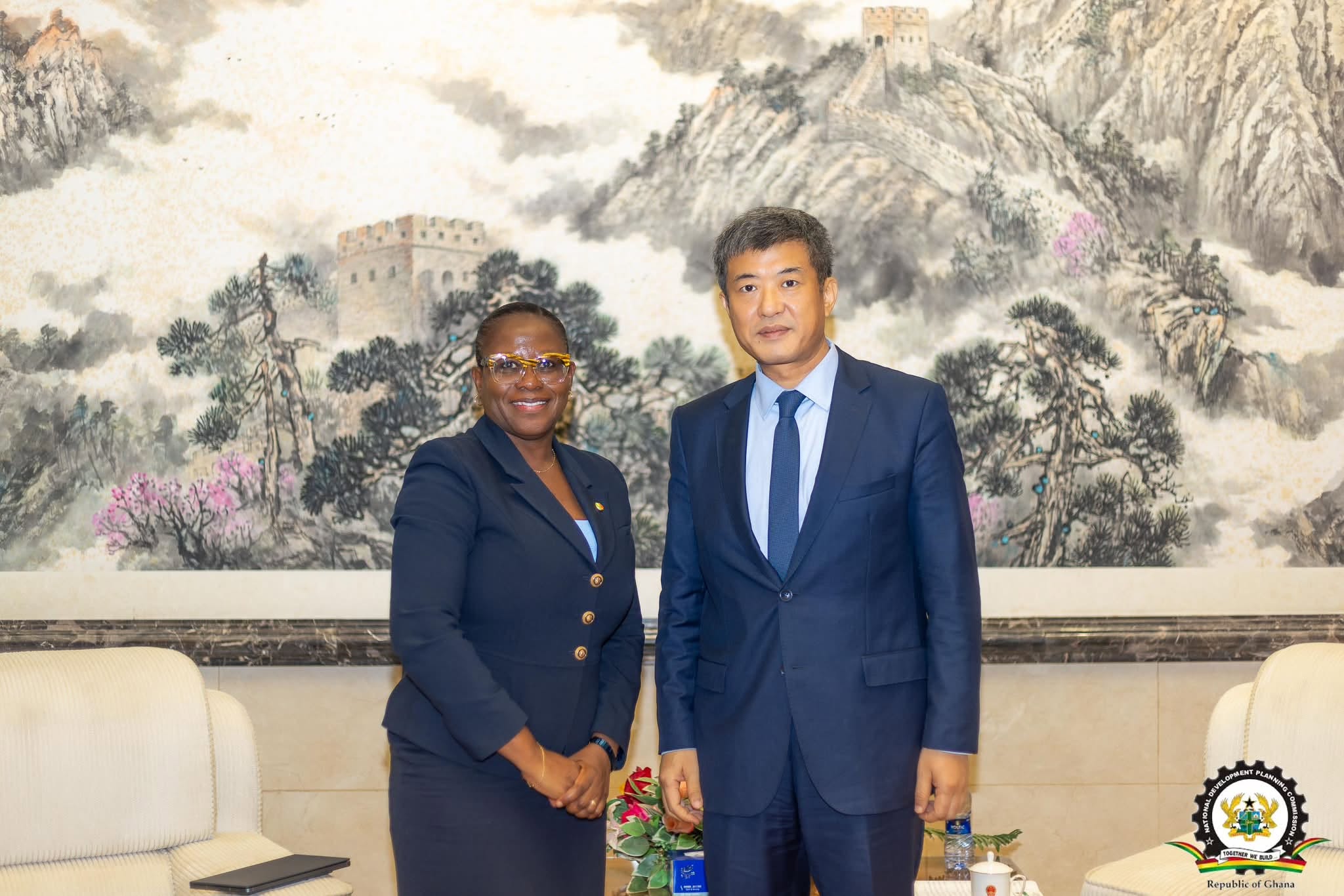
The Director-General of the NDPC, Dr Audrey Smock Amoah, made this known when she led a delegation of the Commission on a courtesy call on the Chinese Ambassador to Ghana, H.E. Cong Song, on Wednesday.
She said Ghana had an opportunity to broaden its engagement with China beyond trade and economic cooperation to include knowledge exchange and institutional partnerships that could support the country’s long-term development aspirations.
Dr Amoah briefed the Ambassador on the Commission’s work towards developing a Consolidated National Development Plan, following a presidential directive to bring previous long-term development plans into a unified framework.
She explained that the initiative was intended to establish a more coherent national development direction and promote continuity in development policies and programmes across successive administrations.
The Plan, she said, would be structured around five key dimensions: economic development; social development; infrastructure, spatial development and the environment; governance and institutional development; and international relations.
She added that the Commission had undertaken strategic engagements across all 16 regions to deepen public understanding and build support for the implementation of the proposed development framework.
In response, Ambassador Cong Song welcomed the proposed partnership and reaffirmed China’s commitment to strengthening its cooperation with Ghana.
He identified agricultural modernisation, green mining, green manufacturing and electric vehicle development as potential areas for expanded collaboration, stressing the need for value addition, technology transfer and increased involvement of Chinese businesses in Ghana’s local production systems.
The Ambassador also expressed support for Ghana’s efforts to establish a long-term development framework, emphasising that sustained implementation would require broad national ownership and commitment.
He indicated that the Chinese Embassy would explore avenues for technical cooperation with the NDPC, including training programmes and institutional capacity-building initiatives to strengthen the Commission’s work.
Judith Twumwaa, ISD