President Mahama Assures German Investors of Ghana’s Stability, Cites Economic Growth and Investment Opportunities
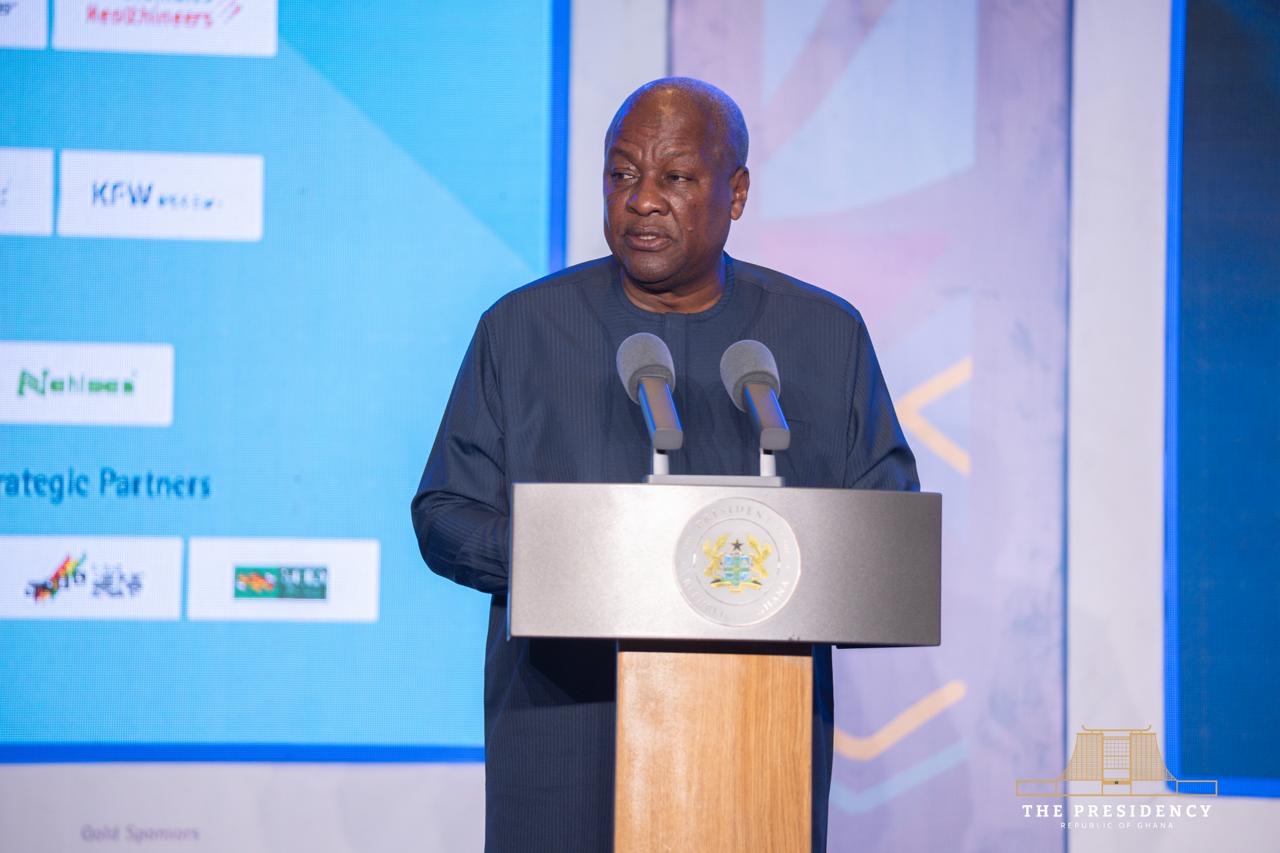
Ghana is positioning itself as a destination where investors can plan with confidence, operate competitively and build sustainable enterprises, President John Dramani Mahama has told German businesses, pointing to improvements in the country’s economic indicators and plans to mobilise US$10 billion for investment between 2027 and 2030.
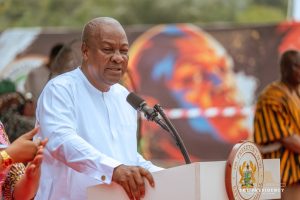
Addressing the 6th German-African Business Summit in Accra, President Mahama said the country had moved beyond the immediate task of economic stabilisation and was now focused on expanding growth, building resilience and transforming the productive sectors of the economy.
He cited an economic growth rate of 6.0 percent in 2025 and a further 6.0 percent year-on-year growth in the second quarter of 2026 as evidence of the economy’s performance.
Inflation, he said, had declined from 23.8 percent in December 2024 to 5.2 percent in September 2026, while Ghana’s international reserves stood at US$12.94 billion as of June 2026.
The President also noted that Ghana’s Gross Domestic Product had crossed the US$100 billion mark, placing the country among the largest economies in Africa and making it the second-largest economy in West Africa.
“These are not just statistics, they are clear evidence that Ghana has moved beyond stabilisation. We are now focused on growth, resilience and transformation,” he stated.
He gave a direct assurance to investors, saying: “And so for investors, the message is simple: Ghana is stable, Ghana is growing, and Ghana is open for business.”
President Mahama said the government was working to create an environment in which investors could make long-term plans, operate competitively and establish enterprises that would contribute to the country’s development.
He invited German companies to look beyond conventional trade arrangements and consider investment opportunities in sectors where Ghana was seeking to expand production and add value to its resources.
As part of that agenda, he announced that Ghana intended to invest US$10 billion between 2027 and 2030 under the New Economy Programme.
The initiative, he explained, would be pursued in partnership with the private sector, including German companies, to expand productive activity and create opportunities for businesses.
The programme will cover agriculture, agro-processing, manufacturing, energy, infrastructure, pharmaceuticals, tourism, the creative industry, digital innovation and mineral beneficiation.
President Mahama said the government was seeking investment that would create value, transfer knowledge, strengthen local enterprises and generate employment.
He indicated that German businesses had an opportunity to contribute through their experience in technology, engineering, industrial production and skills development.
He also referenced the 24-hour economy as part of the government’s effort to make better use of productive assets, extend operating hours and enable businesses to increase production through multiple shifts.
The President urged investors to consider Ghana not only as a market in its own right but also as a base from which to access opportunities across Africa through the African Continental Free Trade Area.
He said the government’s objective was to translate the country’s economic progress and investment plans into productive partnerships, new enterprises and jobs.
Richard Aniagyei, ISD