President Mahama Unveils Three-Pillar Global Plan for Reparatory Justice
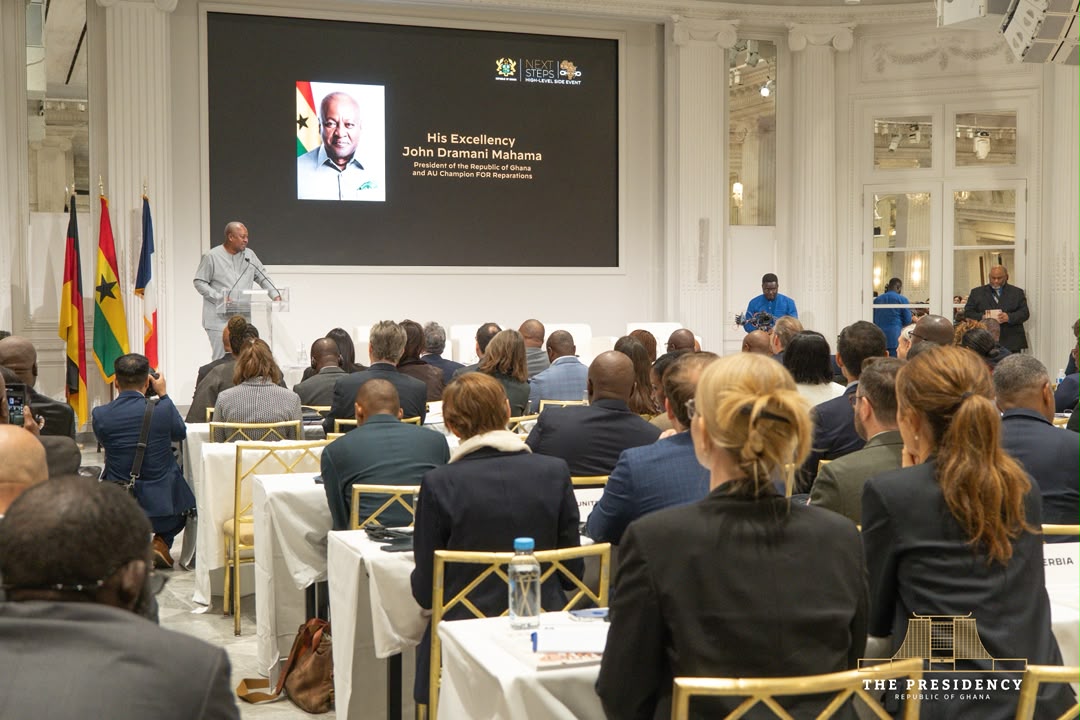
President John Dramani Mahama has unveiled a three-pillar international framework aimed at transforming global commitments on reparatory justice into concrete action, positioning Ghana at the forefront of efforts to secure the return of Africa’s looted cultural heritage.
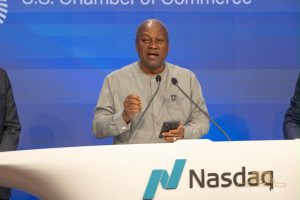
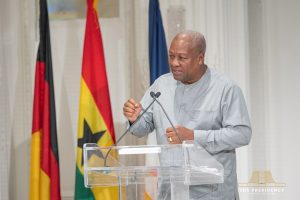
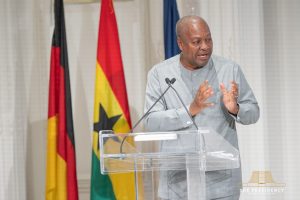
Speaking at a high-level side event on next steps on the sidelines of the 81st United Nations General Assembly, President Mahama said the Accra Next Steps Commitment, adopted after Ghana’s consultative conference in June, provides a practical blueprint for implementing reparatory justice across Africa and the diaspora.
He explained that after the United Nations General Assembly adopted Resolution A/RES/80/250 in March this year, the global conversation had shifted from acknowledging historical injustice to determining the mechanisms for meaningful implementation.
“Truth is not a destination. Truth is a starting line.
“We must move from acknowledgement to action and from commitment to implementation,” the President said.
The first pillar focuses on consolidating the progress already made through voluntary restitutions and international cooperation.
President Mahama commended the Netherlands for cataloguing approximately 2,000 Ghanaian artefacts for return, Germany for its engagement with the Kpando Traditional Area, and France for legislative reforms that enabled the return of sacred talking drums to Côte d’Ivoire.
He also acknowledged the Catholic Church and the Church of England for publicly apologising for their historical roles in slavery, with the latter committing £100 million towards a reparatory justice fund.
The second pillar calls for the creation of permanent international legal and diplomatic systems under UNESCO and the United Nations to facilitate provenance research, improve transparency of archives and accelerate unconditional restitution.
According to President Mahama, moral justice cannot depend on isolated acts of goodwill but requires institutional mechanisms that are predictable and universally applied.
The third pillar centres on investment in Africa’s cultural infrastructure.
He urged multilateral development banks, international financial institutions, philanthropic foundations and private investors to support museums, regional archives, conservation laboratories, digitisation projects and the training of African curators and historians.
President Mahama said cultural heritage should be recognised as a strategic development asset capable of strengthening education, identity, tourism and the creative economy.
Reflecting on the significance of the initiative, he said the ultimate beneficiaries would be future generations of Africans who deserve access to the tangible evidence of their civilisation on their own continent.
“Our young people must inherit more than the story of what Africa lost. They must inherit the story of what Africa created,” he said.
The Accra Next Steps initiative emerged from Ghana’s June 2026 consultative conference, which brought together leaders from Africa, the Caribbean and the wider African diaspora to develop coordinated proposals for reparatory justice following the UN resolution.
Richard Aniagyei, ISD