Advancing information integrity: MFC, Ghana and IFPIM co-host side event at UNGA
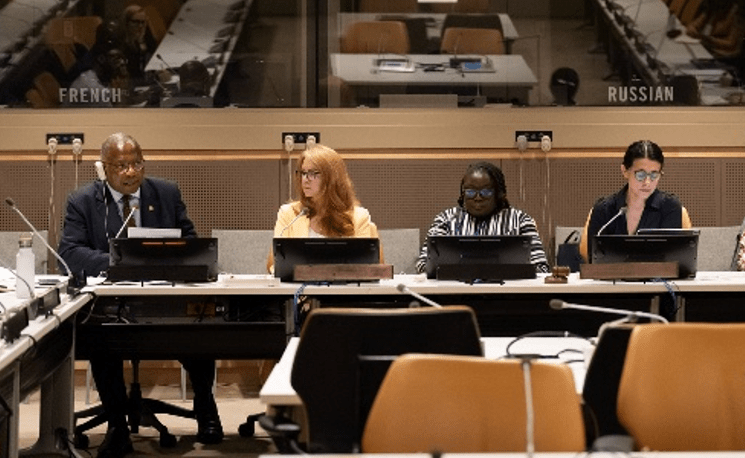
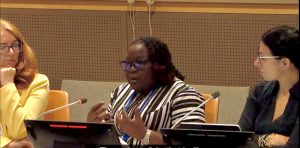
On September 25th, on the margins of the 81st session of the United Nations General Assembly, the MFC, the Government of Ghana and the International Fund for Public Interest Media (IFPIM) co-hosted an event on what the world can learn from African experiences of protecting information integrity.
Felix Ofosu Kwakye, Minister of Government Communications of Ghana, gave the keynote address. He said Africa should be seen as a source of solutions, not only as a place that is vulnerable: “Our continent is not only experiencing the challenges of information disorder; we are also developing innovative and practical responses.”
“Let us move from principles to practice, and from commitments to delivery.”
Ms Laura Rissanen, Vice Minister to the Minister of Social Security of Finland (MFC co-chair), also gave remarks. She called the event timely, saying “information integrity has become one of the defining challenges of our time.”
She added, “A resilient society is not only built through institutions and infrastructure; it is also built through informed and engaged citizens.” She also pointed out that the harms are not shared equally: “Women and girls are disproportionately targeted by technology-facilitated gender-based violence and abuse, which can silence voices, undermine participation in public life, and reverse hard-won progress toward gender equality.”
Mr Felix Ofosu Kwakye, Minister of Government Communications of Ghana
The panel discussion that followed was moderated by Ben Dotsei Malor, Deputy Permanent Representative of Ghana to the United Nations.
Jodie Ginsberg, CEO of the Committee to Protect Journalists started the discussion by highlighting the risks for journalists.
“Attacks on journalists and journalism cause the public to doubt the information that journalists gather and disseminate. It creates deliberate confusion, and it allows those in power to control the narrative.” She added: “Make no mistake, journalists are under threat globally like never before.”
Catherine Amirfar, Deputy Co-Chair of the High Level Panel of Legal Experts on Media Freedom, said disinformation threatens people’s ability to tell what is true, not just the act of telling the truth: “It’s the ability to actually understand what is going on in the world around us.”
She also warned about spyware used against journalists: “Targeting journalists compromises confidential sources, chills investigative reporting, and undermines the ability of the press to report without interference.”
Makmid Kamara, IFPIM’s Regional Director for Africa, said financial pressure on media is a serious threat that gets less attention. He gave an example from Sierra Leone.
After a community radio station there closed for lack of funds, a local politician bought his own transmitter and went on air unchallenged. Funding from Sierra Leone’s new national fund for public interest media then helped start an independent outlet in the same district.
“The solutions are there,” he said. “It is about how we open those solutions and scale them.”
Churchill Otieno, President of The Africa Editors Forum, said 67 of the 332 journalists currently in prison around the world are being held in Africa.
“Each number represents a person in prison for doing work the public depends on.”
Dr Winnifred Nafisa Mahama, Acting Director of Ghana’s Information Services Department, described the government’s role as creating the right environment while respecting free expression.
“There’s a thin line between providing access to information and also putting in mechanisms that ensure that that information is credible,” she said.
She explained that Ghana is training information officers in every district to spot misinformation, disinformation and deepfakes, as part of a joint approach under the framework of the Open Government Partnership.
Ambassador Kate Foster, Deputy Permanent Representative of the United Kingdom to the UN (MFC co-chair), gave the closing remarks. She described control of information as “one of the greatest strategic battlegrounds of our age.”
“If we want societies that are resilient, informed, and free, we must stand up for the journalists and media organisations that make them possible.”
ISD