Africa Will No Longer Export Wealth and Import Poverty – President Mahama
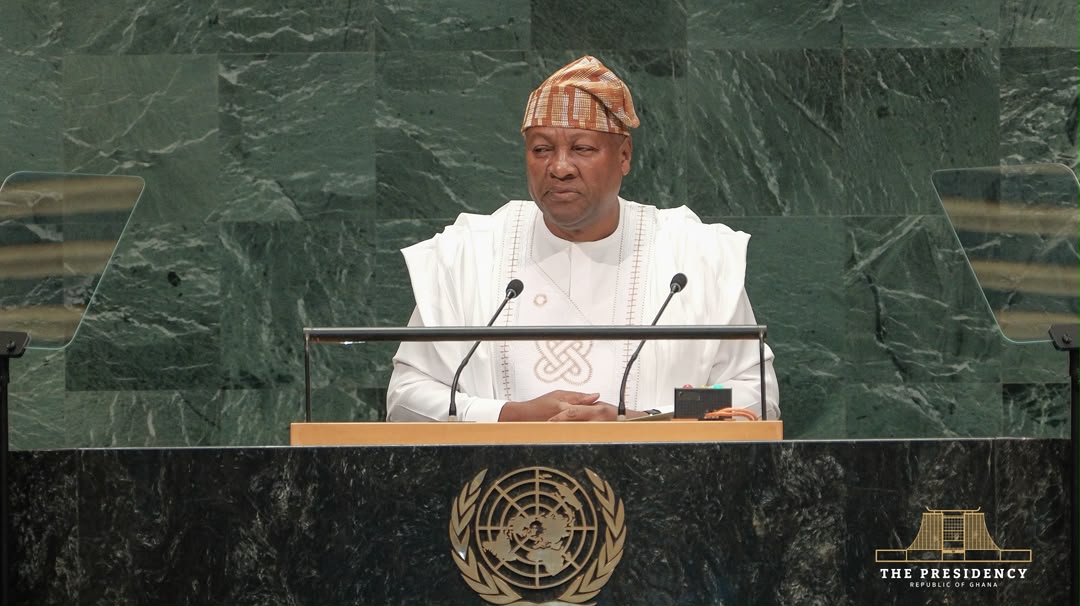
President John Dramani Mahama has declared that Africa will no longer remain a passive supplier of raw materials, insisting that the continent must process its critical minerals locally to create industries, jobs and lasting economic value.
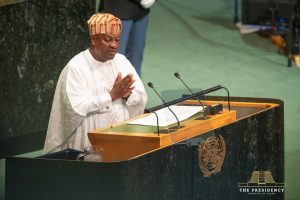
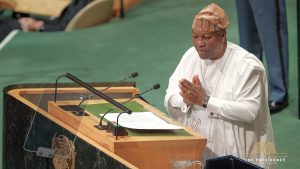
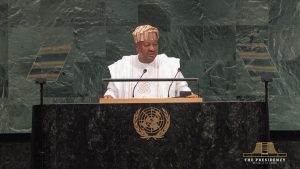
Delivering Ghana’s national statement at the 81st United Nations General Assembly, President Mahama said the global transition to green energy must not repeat the exploitative patterns of the colonial era, where Africa exported raw resources while value addition and industrial jobs were created elsewhere.
He said Africa possessed the world’s youngest population, vast arable land and the critical minerals needed to power the global green transition, making it imperative for the continent to retain greater benefits from its natural resources.
“Critical mineral extraction must not replicate colonial-era exploitation. We will process our minerals at home, build local industries, create dignified jobs for our youth, and retain the value of our natural resources,” President Mahama stated.
The President described the African Continental Free Trade Area (AfCFTA), whose Secretariat is hosted in Accra, as the continent’s principal vehicle for expanding intra-African trade, accelerating industrialisation and driving structural economic transformation.
He linked mineral beneficiation to broader reforms of the international economic system, arguing that Africa must move beyond dependence on commodity exports towards manufacturing and value-added production.
President Mahama said Ghana’s own economic transformation agenda, including the 24-Hour Economy and accelerated export development programme, was designed to position the country as an industrial and high-productivity hub capable of creating sustainable employment for young people and women.
He urged African countries to pursue coordinated industrial policies that would ensure the continent benefited fully from its abundant mineral wealth rather than remaining at the bottom of global value chains.
Richard Aniagyei, ISD