From Loss to Profit: SOEs Deliver GH¢19.8bn in 2025 – President Mahama
State-Owned Enterprises recorded a dramatic financial turnaround in 2025, moving from an aggregate net loss of GH¢2.26 billion in 2024 to a GH¢19.8 billion net profit.
The improved performance reflects growing momentum in the reform of the state enterprise sector.
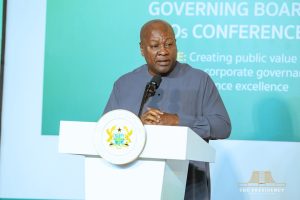
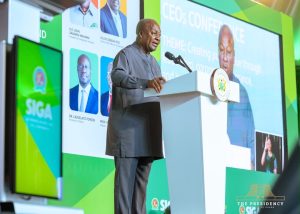
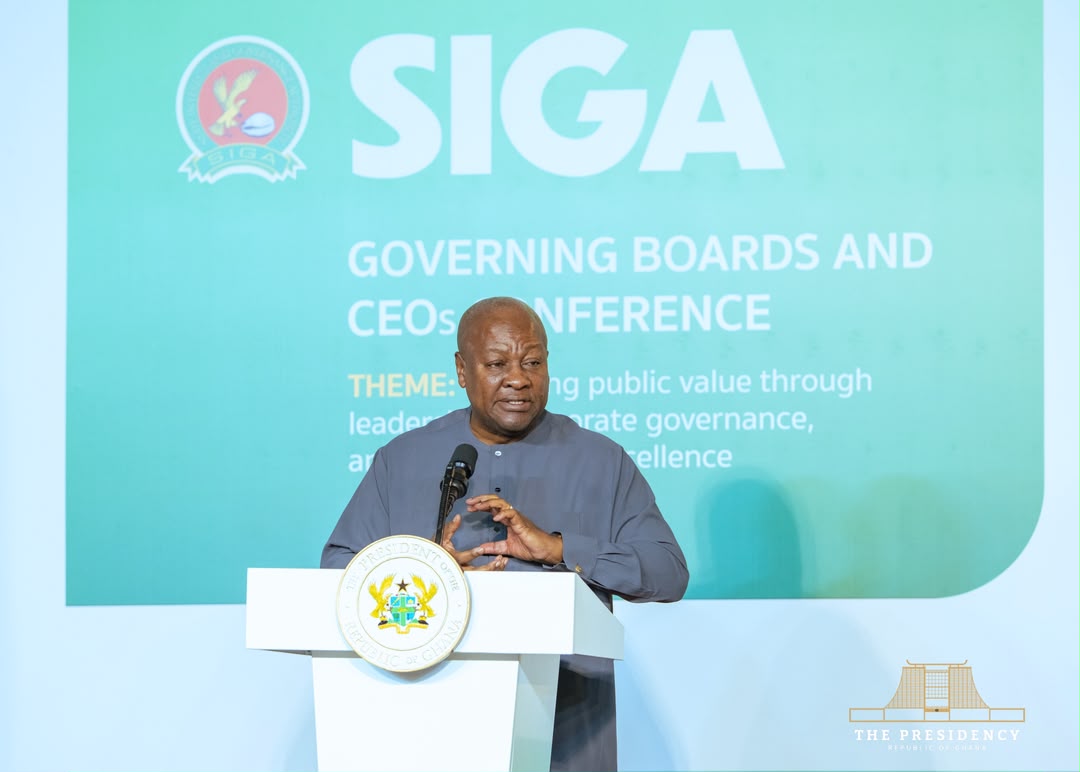
President John Dramani Mahama disclosed this at the SIGA Governing Boards and CEOs Conference in Accra, calling for sustained operational efficiency to consolidate the gains.
He noted that the combined revenue of SOEs increased from GH¢137.71 billion in 2024 to GH¢176.43 billion in 2025.
He added that return on assets improved from 1.3 per cent to 6.31 per cent, while return on equity rose from minus 1.6 per cent to 15.7 percent.
“These results are encouraging, but they must be understood within the context of a much stronger business environment,” the President said.
According to him, foreign exchange gains of about GH¢11.72 billion and a 42.5 per cent reduction in finance costs contributed significantly to the improved financial position of the enterprises.
President Mahama commended ten SOEs that remained profitable every year between 2021 and 2025.
He said the Ghana National Petroleum Corporation recorded the highest average annual profit of approximately GH¢2.25 billion, followed by the Ghana Ports and Harbours Authority with GH¢1.41 billion and the Minerals Income Investment Fund with GH¢773.9 million.
The President also recognised Bui Power, Volta River Authority, Ghana Exim Bank, Ghana National Gas Corporation, TDC Company Limited, Ghana Supply Company Limited and the Venture Capital Trust Fund for their consistent performance.
He acknowledged remarkable recoveries by the Tema Oil Refinery, Ghana Water Limited and COCOBOD, describing their return to profitability as evidence of the value of transparency, accountability and strategic reform.
President Mahama, however, cautioned that one successful year was not enough, stressing that sustained performance remains the true measure of institutional excellence.
Richard Aniagyei, ISD