Government Steps Up Coordinated Effort to Cut Maternal Deaths

The government has intensified efforts to tackle Ghana’s persistent maternal mortality challenge with the launch of a five-year initiative aimed at reducing maternal deaths by 20 per cent annually.
Known as the Presidential Initiative on Maternal Health Emergency Response (PRIMER), the programme seeks to strengthen the systems that support women before, during and after childbirth, with particular attention to emergency response, referrals and access to quality care.
The Vice President, Prof. Jane Naana Opoku-Agyemang, who launched the initiative on behalf of President John Dramani Mahama, said Ghana could not afford to lose women to preventable complications during childbirth.
The initiative, being implemented under the theme, “No Woman Should Die While Giving Life,” brings together stakeholders across the health and non-health sectors to address the factors that continue to put mothers at risk.
Prof. Opoku-Agyemang noted that Ghana’s maternal mortality ratio remained above the Sustainable Development Goal target of fewer than 70 deaths per 100,000 live births by 2030.
She said improving maternal survival would require more than expanding clinical services, stressing the need for effective emergency preparedness, reliable transportation, better communication and stronger coordination among health facilities.
According to the Vice President, PRIMER would therefore involve ministries, public institutions, local authorities, traditional and religious leaders, civil society organisations, the private sector and communities.
She said the broad partnership was necessary because several factors contributing to maternal deaths, including poor road networks, transportation difficulties, and inadequate water and energy supply, extended beyond the health sector.
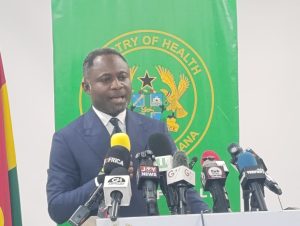
The Deputy Minister for Health, Prof. Grace Ayensu-Danquah, said the Ministry of Health had incorporated its Maternal Mortality Action and Response Programme (MMARP) into PRIMER as its fifth pillar.
She explained that the integration would give the initiative a dedicated clinical and operational component focused on responding to the factors directly associated with maternal deaths.
Prof. Ayensu-Danquah disclosed that Ghana’s maternal mortality ratio currently stood at about 234 deaths per 100,000 live births, while institutional maternal deaths reached 965 in 2025.
She said a substantial number of the deaths involved women referred from lower-level health facilities, highlighting weaknesses in the early identification of high-risk pregnancies and delays in transferring critically ill patients.
Other challenges, she noted, included inadequate critical-care equipment and gaps in access to blood and other essential medical resources.
Under MMARP, the Ministry intends to strengthen primary-level maternal care, improve referral systems and enhance emergency response capacity.
She said the measures were expected to contribute to the initiative’s target of reducing maternal mortality by 20 per cent annually over the next three years.
Launching PRIMER, the Vice President called on health professionals, communities, traditional and religious leaders, development partners and government institutions to take collective responsibility for improving maternal health outcomes.
She urged stakeholders to ensure that women seek care early and that those who develop complications receive the appropriate intervention without delay.
The initiative reflects the government’s broader effort to address maternal deaths through a coordinated response that links healthcare delivery with transportation, infrastructure, community action and emergency preparedness.
Grace Acheampong, ISD