ISD strengthens verification capacity as Ghana advances three-level strategy against misinformation
The Information Services Department (ISD) is strengthening the capacity of its officers in digital verification techniques as part of a broader three-level national strategy to combat misinformation, disinformation and AI-generated content, the Minister responsible for Government Communications, Felix Kwakye Ofosu has announced.
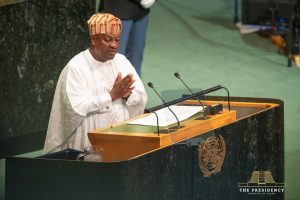
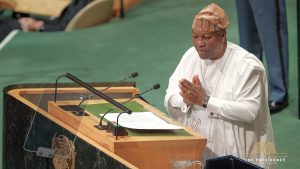
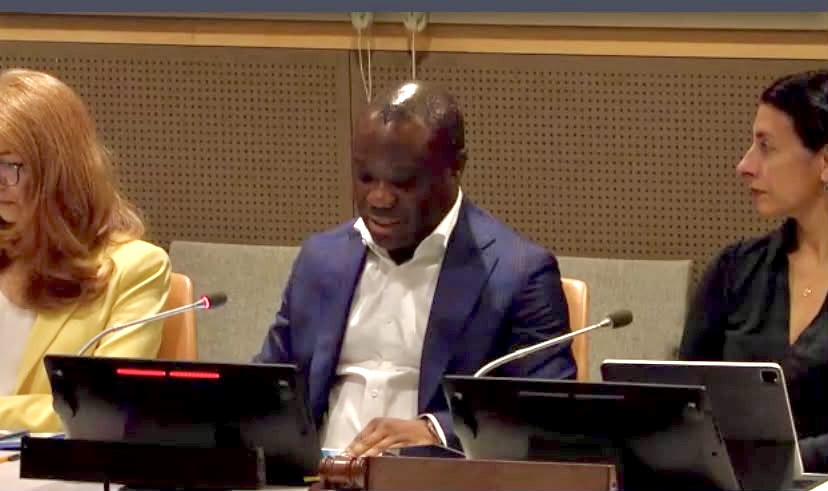
Speaking at a high-level United Nations side event on Information Integrity in New York, the Minister said Ghana’s response connects community action, institutional capacity and policy coordination through partnerships among government, civil society and communities.
He said at the institutional level, the Information Services Department is equipping officers with verification skills, including lateral reading, reverse image search and deepfake detection, while supporting multilingual digital tools such as Kasagadi.ai.
“At the institutional level, the Information Services Department is strengthening officers’ capacity in verification techniques, including lateral reading, reverse image search and deepfake detection, while supporting multilingual tools such as Kasagadi.ai,” he stated.
The Minister explained that strengthening verification capacity had become increasingly important as misinformation, disinformation and AI-generated content continue to undermine public trust, democratic participation and media freedom.
He said Ghana’s approach extends beyond public institutions to communities across the country.
“At the community level, initiatives such as the Caravan of Hope, delivered with district assemblies and civil society partners, take media and information literacy directly to communities using local languages,” he said.
He added that at the policy level, Ghana is contributing to efforts to address disinformation through the Open Government Partnership National Coalition on Disinformation, which brings government and civil society together around a shared framework for action.
The Minister said these complementary interventions demonstrate how partnership can produce practical responses to information disorder across Africa.
“For Africa, this conversation must go beyond vulnerability. Our continent is not only experiencing the challenges of information disorder, we are also developing innovative and practical responses,” he said.
He noted that the side event, co-convened by the Government of Ghana, the Media Freedom Coalition and the International Fund for Public Interest Media, was held against the backdrop of the UN Global Principles for Information Integrity and Ghana’s commitment under the Paris Declaration on Multilateral Action for Information Integrity and Independent Media.
The Minister urged governments, independent media, civil society and development partners to strengthen collaboration while embracing artificial intelligence responsibly through media literacy, transparency and appropriate safeguards.
He reaffirmed Ghana’s readiness to work with international partners to build information ecosystems that are trusted, inclusive, independent and resilient, saying the global focus must now shift “from principles to practice and from commitments to delivery.”
Richard Aniagyei, ISD