NHIA Links Stronger NHIS Finances to Better Healthcare Service Delivery
The National Health Insurance Authority (NHIA) has reaffirmed its commitment to strengthening the National Health Insurance Scheme (NHIS), citing improved financial stability and regular payment of healthcare claims as key to better service delivery.
The Chief Executive of the NHIA, Dr. Victor Asare Bampoe, said the Authority’s ability to pay submitted and vetted claims to credentialed healthcare providers at least once every month was helping to improve their operations and, ultimately, the quality of care available to NHIS members.
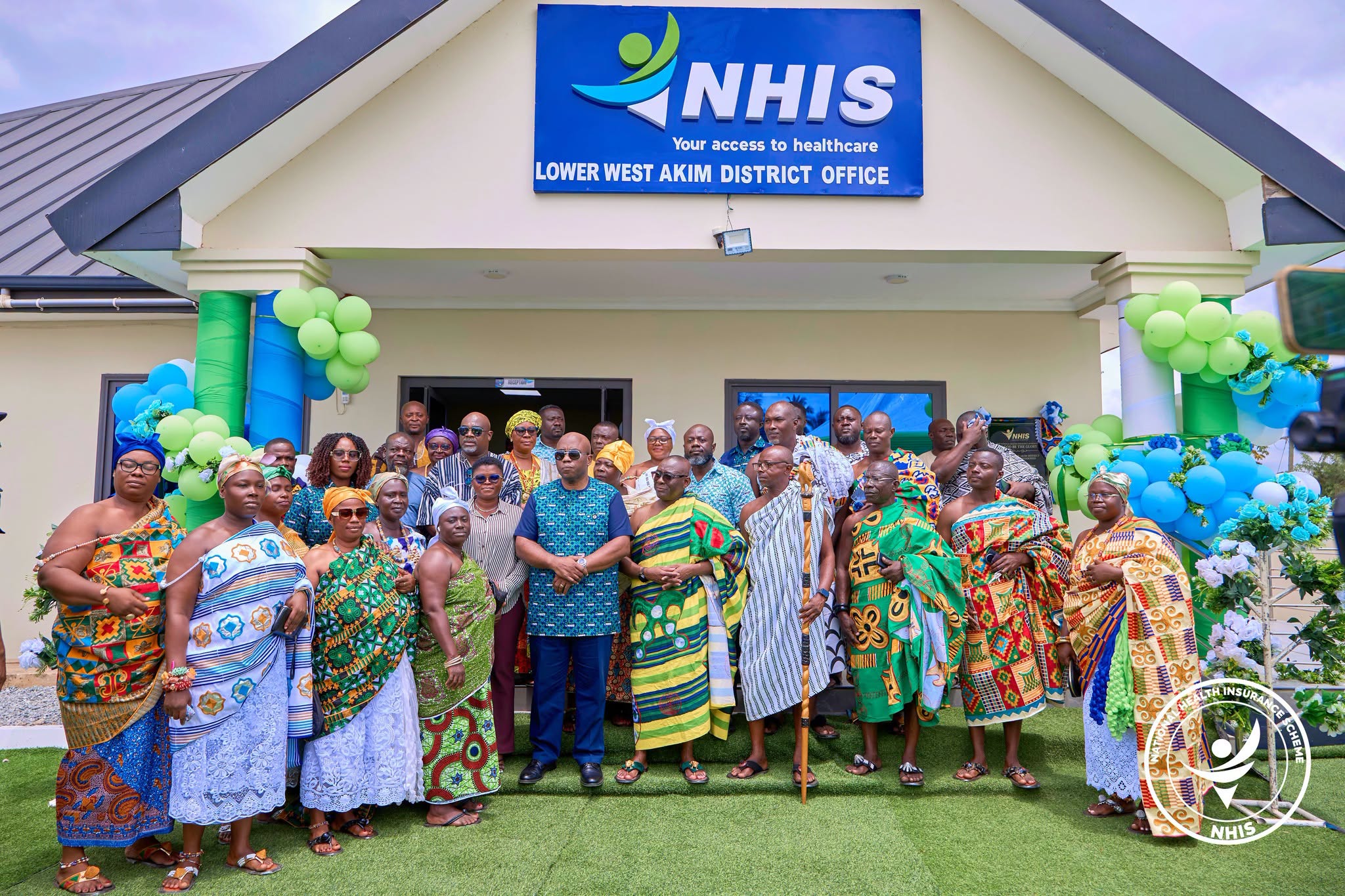
He made the remarks on Wednesday, at Asamankese in the Eastern Region, where he commissioned a new NHIA District Office for West Akim.
Dr. Bampoe disclosed that the NHIA had paid GH¢382 million to healthcare facilities on Tuesday for claims submitted and vetted for September.
He said the Authority had also increased service tariffs by 50 per cent since August 2026, describing the measures as part of efforts to strengthen the NHIS and support healthcare providers to deliver services more effectively.
“We thank the Ministers of Finance and Health for ensuring and facilitating our access to any amount of money the NHIA requires to enhance the NHIS,” he said.
Dr. Bampoe said the government remained committed to improving healthcare and ensuring that no one was left behind, stressing that the NHIS remained an important pillar in the country’s pursuit of Universal Health Coverage (UHC).
He also used the occasion to caution credentialed healthcare providers against charging NHIS members co-payments.
“To enhance the NHIS, I want to remind our credentialed health facilities that co-payment is not accepted under the NHIS. These are illegal charges,” he said.
According to him, the regular reimbursement of claims and the 50 per cent increase in service tariffs should remove any justification for such charges.
He warned that facilities and individuals found engaging in the practice would be dealt with according to law.
The newly commissioned office, Dr. Bampoe said, would strengthen the NHIA’s presence in West Akim and make it easier for residents to access NHIS services.
The commissioning was supported by the Municipal Chief Executive for Lower West Akim, Paulina Akabila, while the Paramount Chief of the Asamankese Traditional Area, Osabarima Adu Darko III, chaired the ceremony.
Traditional and religious leaders, as well as representatives of NADMO, the Ghana National Fire Service, BNI, Ghana Police Service, NIA, NAS, Ghana Immigration Service, Ghana Education Service and ECG, attended the ceremony.
Dr. Bampoe welcomed the completion of the office, noting that the project was started under the previous New Patriotic Party (NPP) administration and completed under the current government.
“This is a very good step on the part of government because continuity in governance is beautiful and ensures development,” he said, and thanked President John Dramani Mahama for ensuring the project was completed.
He urged NHIA staff to reciprocate the confidence placed in them by the President and the Ministers of Finance and Health by working diligently and ensuring that NHIS members received services with dignity.
He also encouraged Ghanaians to make full use of healthcare services, from preventive and promotive care to curative services.
“A healthy nation is a wealthy nation,” he said.
Dr. Bampoe said West Akim had a population of 225,802, with a UHC target of 180,642.
As of September 30, 2026, the district had 117,418 active NHIS members, representing 65 per cent of its target, compared with 60 per cent during the same period in 2025.
Although he commended the improvement, he said the 65 per cent coverage should not be treated as the final destination.
He therefore challenged NHIA staff to intensify community outreach and work with local stakeholders to educate residents on the benefits of NHIS membership and the need to keep their memberships active.
Dr Bampoe further explained that the government’s Free Primary Healthcare (FPHC) policy complemented the NHIS in advancing UHC.
He said the policy focused on preventive, promotive and curative healthcare and was designed to enable people to access basic primary healthcare at the point of care, even without active NHIS membership.
Osabarima Adu Darko III praised the government for completing a project initiated by a previous administration, saying continuity in governance was essential to national development.
“We want the era of abandoned projects wasting state resources to be a thing of the past, and we thank the government for doing this,” he said.
He also welcomed the FPHC policy, particularly its emphasis on preventive and promotive healthcare.
The Paramount Chief said the new NHIA office was “real good news” for residents, many of whom had previously struggled to register or renew their NHIS membership because of the distance to the nearest office.
“Today, the struggle is over with the presence of this new office,” he said.
He urged residents to take their health seriously and maintain active NHIS membership.
Madam Akabila, for her part, thanked the Paramount Chief for making land available for the project and commended both the previous and current administrations for their roles in its completion.
She pledged the Assembly’s support for the NHIA and assured that the facility would be properly maintained.
The Eastern Regional Director of the NHIA described the new facility as evidence of the Authority’s growth and a commitment to improving service delivery.
“This new building is more than a beautiful thing. It is part of the physical evidence of our growth, a testament to our shared hard work and a promise to serve our community and members with greater excellence and innovation,” he said.
Grace Acheampong, ISD.