President Mahama Calls for Unconditional Return of African Human Remains and Looted Artifacts
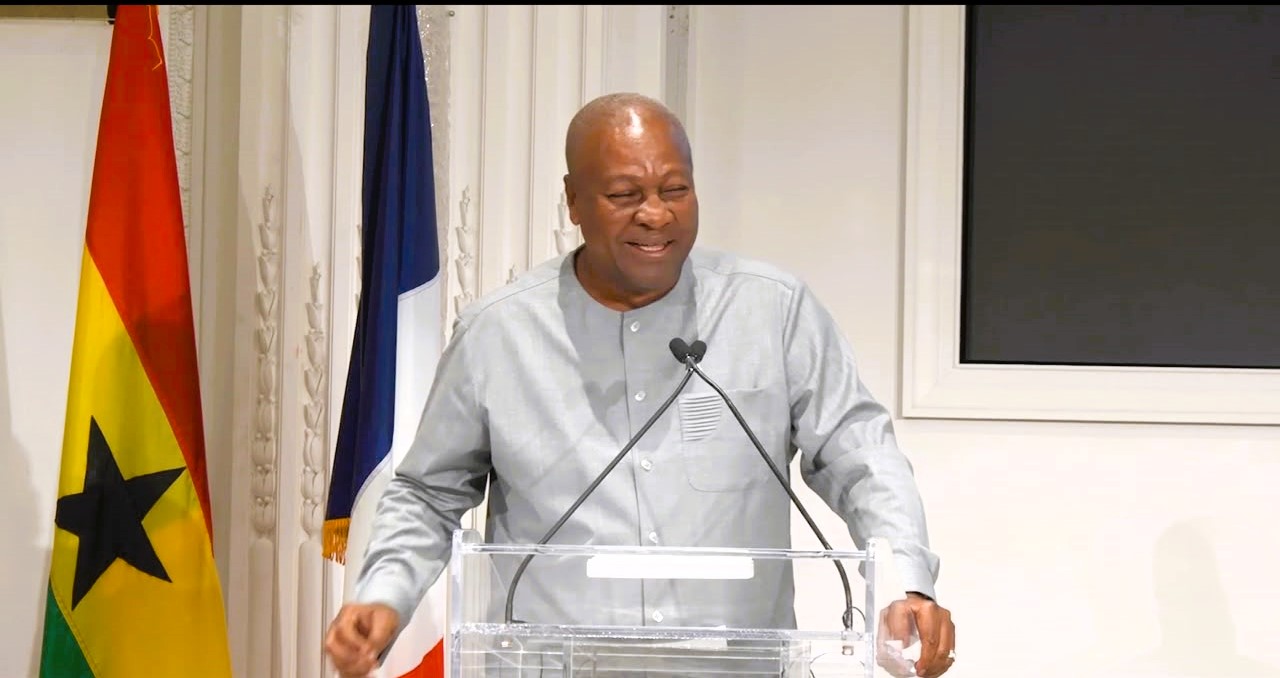
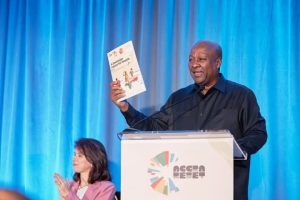
President John Dramani Mahama has called for the immediate and unconditional return of African human remains, sacred artefacts and looted cultural property, describing their restitution as a fundamental test of shared human dignity rather than a matter of legal ownership.
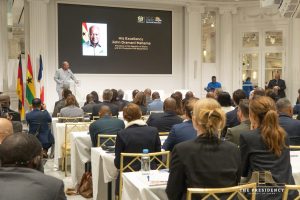
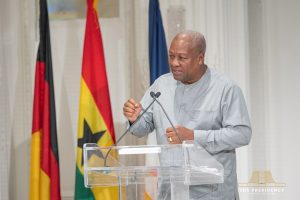
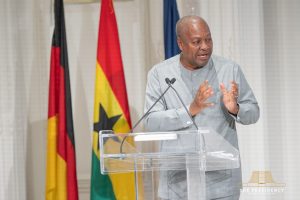
Addressing a high-level side event on Next Steps on the sidelines of the 81st United Nations General Assembly, the President said Africa’s cultural heritage represents the memory, identity and living traditions of its people, and should no longer remain separated from the communities that created it.
He said the return of human remains must become the starting point of a broader global restitution process.
“Human remains are not collectibles. They are not specimens. They are our ancestors. They are fathers and mothers. They are kings and elders. Restoring them is not a matter of legal ownership. It is a fundamental test of our shared human dignity,” President Mahama stated.
The President recalled the execution of Ahanta King Badu Bonsu II by Dutch colonial authorities in 1838, explaining that his head was removed after his execution and preserved in formaldehyde for 170 years before being rediscovered and returned to Ghana in 2009.
He described the episode as one of the most painful examples of the treatment of African heritage during the colonial era.
President Mahama also referenced the 1874 attack on Kumasi by British forces, during which the palace of the Asantehene was looted, noting that although some sacred objects, including the Mpomponsuo Sword, were returned in 2024, many priceless artefacts remain abroad.
He said similar stories of cultural loss could be found across Benin City, Magdala in Ethiopia and Abomey in Benin, where royal treasures were removed during military expeditions.
According to the President, Africa’s history was never confined to written records alone.
He said it was carved into sacred wood, cast in royal bronze, forged in iron, woven into kente, preserved in manuscripts and embodied in sacred objects that carried the memory of generations.
President Mahama therefore urged UNESCO, the United Nations and countries holding African cultural property to establish clear and standardized legal and diplomatic procedures that would simplify provenance research, improve archival transparency and remove barriers to restitution.
“We call on UNESCO and the United Nations, and countries that hold these artefacts, to establish clear, standardized legal and diplomatic mechanisms that streamline provenance research, make archives transparent and lower the legal barriers to unconditional restitution, starting immediately with the unconditional return of all human remains,” he said.
He stressed that Africa was not seeking to assign guilt for historical actions but to build partnerships capable of repairing the future through justice and mutual respect.
The President concluded that the story of Africa’s cultural heritage should no longer end with its removal, but with its return to the people whose history it represents.
Richard Aniagyei, ISD