President Mahama Commissions new evaporated milk production line at Nestlé, Links Expansion to 24-Hour Economy
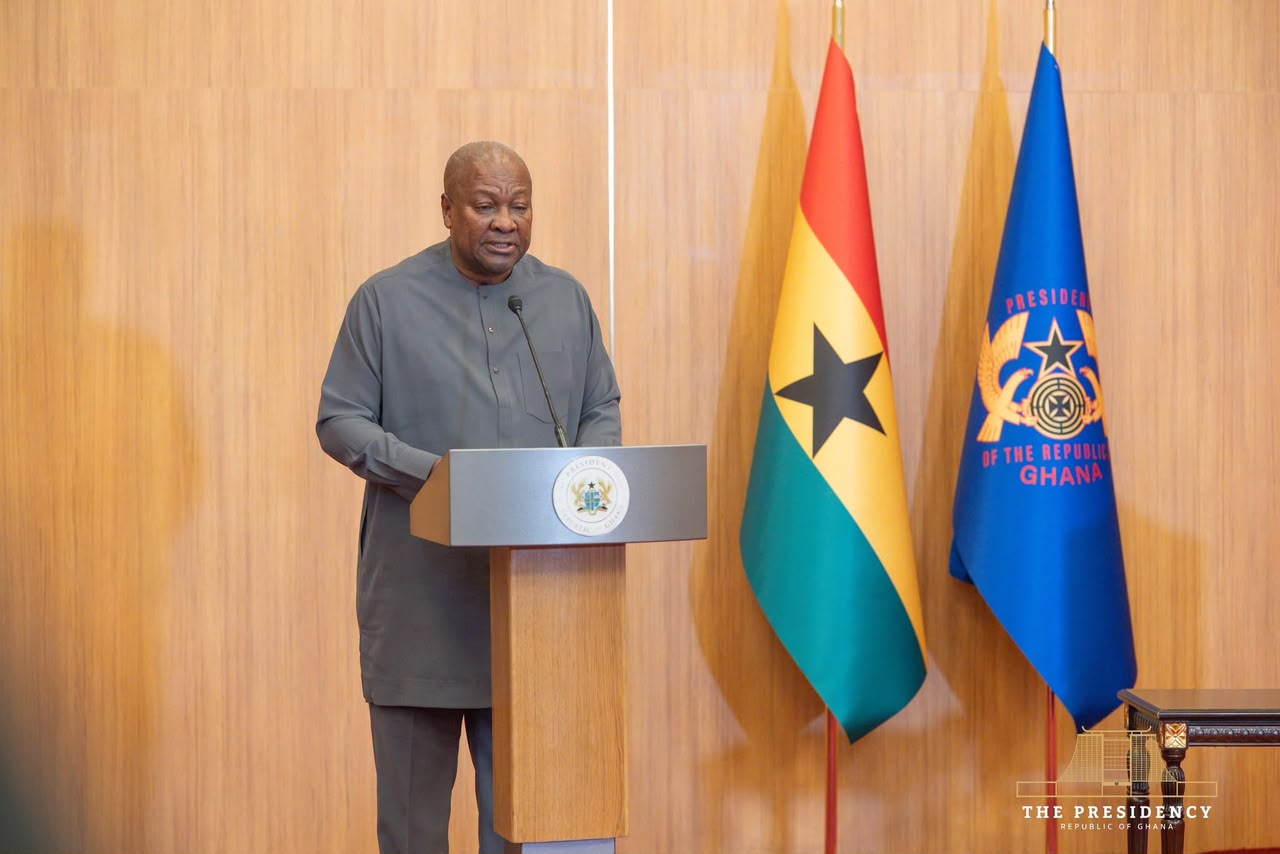
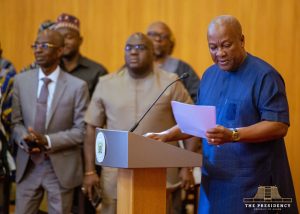
President John Dramani Mahama has commissioned a new evaporated milk production line at Nestlé Ghana Limited in Tema, citing the factory’s round-the-clock operations as an example of the production model underpinning his government’s 24-hour economy initiative.
The expanded line increases Nestlé Ghana’s annual evaporated milk production capacity from 12,960 tonnes to nearly 30,000 tonnes and forms part of a factory that operates through the night, weekends and public holidays.
“This is at the heart of the 24-hour economy initiative. When we talk about the 24-hour economy initiative, this is what we are talking about. A factory that never sleeps,” President Mahama said at the commissioning ceremony on Thursday.
He said the factory supports approximately 1,200 full-time workers and another 1,300 third-party workers, demonstrating the employment opportunities that continuous industrial operations could create.
President Mahama also disclosed that 94.4 per cent of Nestlé employees were Ghanaian.
“This figure is most important because it shows whether a company is creating opportunities for Ghanaians as it grows its business, and to its credit, Nestlé has done that,” he stated.
The President said the new production line replaced an older line that had served the factory for more than 30 years and had reached the limits of its capacity.
He said the increased capacity would allow more evaporated milk to be produced locally, with the milk filled, homogenised, sterilised and packed on Ghanaian soil by Ghanaian workers.
President Mahama said the 24-hour economy initiative was being supported by the Big Push programme, which focuses on investment in roads, railways, ports, energy and industrial infrastructure.
“The 24-hour economy initiative does not stand alone. Besides it stands the Big Push programme, a programme of investment in roads, railways, ports, energy and industrial infrastructure,” he said.
He explained that increased industrial production required infrastructure capable of moving goods efficiently and providing businesses with dependable power.
“These two together express a single national proposition: that Ghana will produce more of what it consumes, export more of what it produces, and lay the physical backbone that makes both possible,” President Mahama said.
He said the principle behind the 24-hour economy was to ensure that productive machinery remained in use while Ghanaians who needed jobs could benefit from the opportunities created.
“Its operations illustrate the principle, again, behind the 24-hour economy, and demonstrate a principle at the heart of my government’s agenda: that a machine will not stand idle while there are Ghanaians who need work that it can provide,” he stated.
President Mahama urged Nestlé Ghana to continue expanding production, deepen its relationship with Ghanaian farmers and suppliers and create more opportunities for young people.
Richard Aniagyei, ISD