President Mahama links Africa’s conflicts to resource control and economic interests
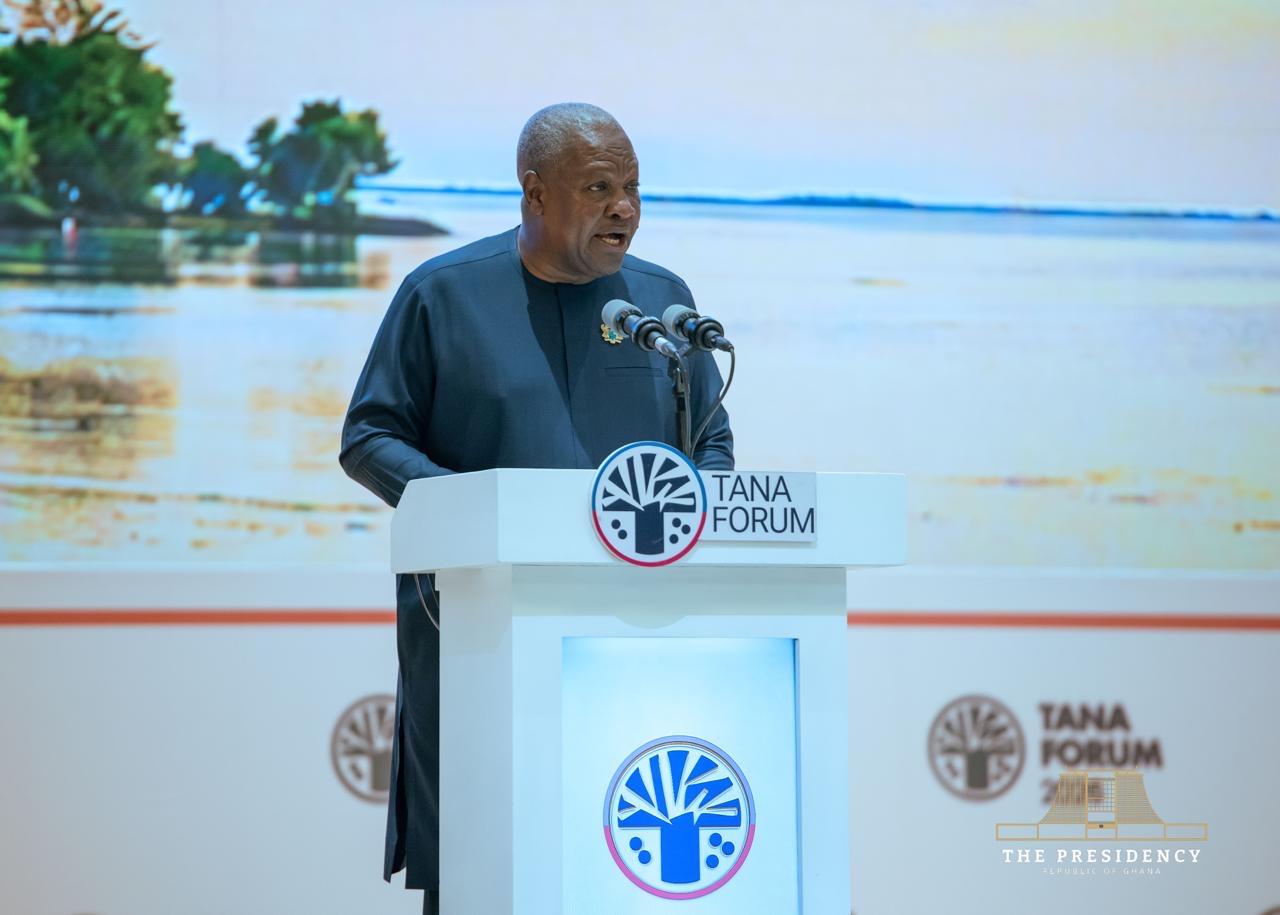
President John Dramani Mahama has called for a shift in how African leaders understand and address conflicts on the continent, arguing that struggles over natural resources, economic interests and political power are among the underlying causes of persistent insecurity.
He said efforts to tackle conflicts often focused on weapons, military deficiencies and the activities of armed groups without sufficiently addressing the political economy sustaining violence.
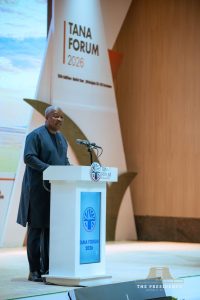
The President stated this at the 12th Tana High-Level Forum on Security in Africa in Bahir Dar, Ethiopia, where he presented 2026 State of Peace and Security in Africa Report at
“For far too long, in rooms like this, we’ve diagnosed Africa’s security challenges through the lens of symptoms,” he said. “But let us be honest with ourselves. Those are merely the fever, not the malaria plasmodium. The real disease is mostly in the arena of political economy.”
He urged African leaders to examine who controls natural resources, who benefits financially from their extraction and whose political interests are served by continued instability.
“When we answer these questions, the fog clears,” he said, arguing that understanding these interests was necessary to developing lasting solutions to conflicts.
President Mahama cited Sudan, eastern Democratic Republic of Congo (DRC), Somalia, Mozambique and the Sahel as examples of situations in which resource disputes, weak governance, economic exclusion and political divisions have contributed to insecurity.
In Sudan, he said, the conflict had fractured the country into parallel administrations, with battle lines drawn around gold extraction sites as well as the capital, Khartoum.
He also linked the resurgence of the M23 rebel group in eastern DRC to competition over minerals, including coltan and cobalt, which are used in global technology and energy supply chains.
In Mozambique’s Cabo Delgado region, he said, the presence of substantial offshore gas wealth had not translated into comparable opportunities for local young people, leaving communities feeling marginalised.
On Somalia, President Mahama argued that gaps in government structures had created opportunities for Al-Shabaab to maintain its presence.
He also drew attention to the Sahel, which he said had accounted for more than half of Africa’s conflict fatalities for four consecutive years, and warned that divisions between the Economic Community of West African States (ECOWAS) and the Alliance of Sahel States had weakened regional security cooperation.
The President said Africa’s natural wealth should give the continent greater influence in the global economy but had instead exposed some communities to exploitation and violence.
He called for resource sovereignty, which he defined as the ability of African states to govern strategic assets, negotiate fair terms and ensure that revenues from natural resources improve people’s lives.
“The world cannot transition to green energy, nor can the digital economy run without Africa’s critical minerals. That ought to make us power brokers. Instead, it has made our communities targets,” he said.
President Mahama’s presentation formed part of discussions at the three-day Tana Forum, held under the theme, “Pathways to Peace in Africa: Economic Sovereignty and Geopolitical Transformation.” The Forum brings together African leaders, policymakers and security stakeholders to examine approaches to the continent’s peace and security challenges.
Richard Aniagyei, ISD