Africa must build resilient economies as foreign aid declines – President Mahama
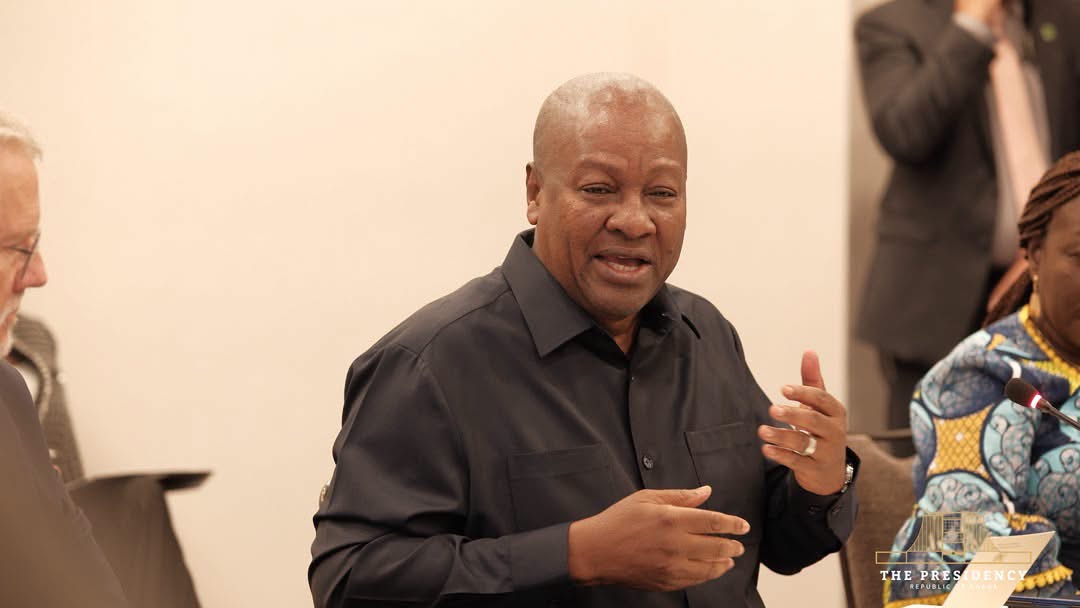
President John Dramani Mahama has called on African countries to move away from dependence on foreign aid and build resilient, self-sustaining economies capable of financing their own development priorities.
He said the continent must respond to declining official development assistance (ODA) by strengthening domestic capacity, mobilising its own resources and taking greater control of development decisions rather than relying on external partners to determine its priorities.
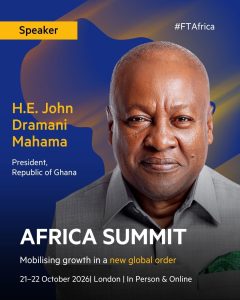
He made the remarks at the Financial Times Africa Summit in London, where he discussed the changing global development landscape and the need for African countries to rethink their economic and financing strategies.
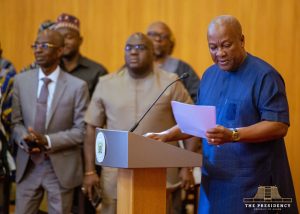
“The response to dwindling aid is not to learn how to improve your begging skills. You need to respond in a different way by becoming more resilient and more sustainable,” President Mahama said.
President Mahama explained that the Accra Reset initiative was initially conceived as a health-focused response to declining development assistance, particularly following the withdrawal of the United States Agency for International Development (USAID).
Ghana, he said, lost about US$154 million annually in assistance, with approximately US$74 million previously directed towards healthcare programmes, including HIV testing, antiretroviral treatment and other interventions.
The reduction in support, he indicated, exposed the vulnerability of essential public services when their financing depends heavily on decisions taken by external governments and development agencies.
The President said the Accra Reset had since evolved into a broader response by countries of the Global South to changes in the international order, with governance structures established to support its work.
He argued that African countries must take the lead in defining their development priorities and ensure that external partnerships support national plans rather than dictate them.
“You cannot own the outcome when you are not part of the decision-making. We must have some control,” he said.
President Mahama maintained that greater national ownership was necessary for countries to build sustainable health systems, strengthen their economies and respond effectively to the needs of their populations.
He said the objective was not to reject international cooperation but to establish partnerships in which African countries had a stronger voice in determining how resources were deployed and what outcomes were pursued.
Beyond healthcare, the President linked the need for resilience to Africa’s wider economic transformation, particularly the creation of jobs for its youthful population.
He called for a shift from exporting unprocessed natural resources to developing local industries that could process raw materials, retain more value within African economies and expand employment opportunities.
“We cannot continue forever as exporters of raw materials to the rest of the world and consumers of finished products. We must bring part of that processing and value addition into Africa to create jobs for our young people,” he said.
President Mahama also pointed to the financial pressures confronting developing countries, including high borrowing costs, debt repayments and illicit financial flows, which reduce the resources available for investment in public services and productive sectors.
He said Africa needed development financing arrangements that allowed countries to invest in their own priorities without being trapped by the high cost of borrowing or the steady outflow of resources.
The President’s call comes amid reductions in development assistance and growing pressure on African governments to find sustainable ways to finance healthcare, infrastructure, education and job creation.
He said a more resilient continent would require stronger domestic institutions, productive economies and partnerships built around African priorities, enabling countries to manage global disruptions while creating prosperity for their people.
Richard Aniagyei, ISD