
Government Moves to Protect Soil Health Through Organic Fertiliser Transition
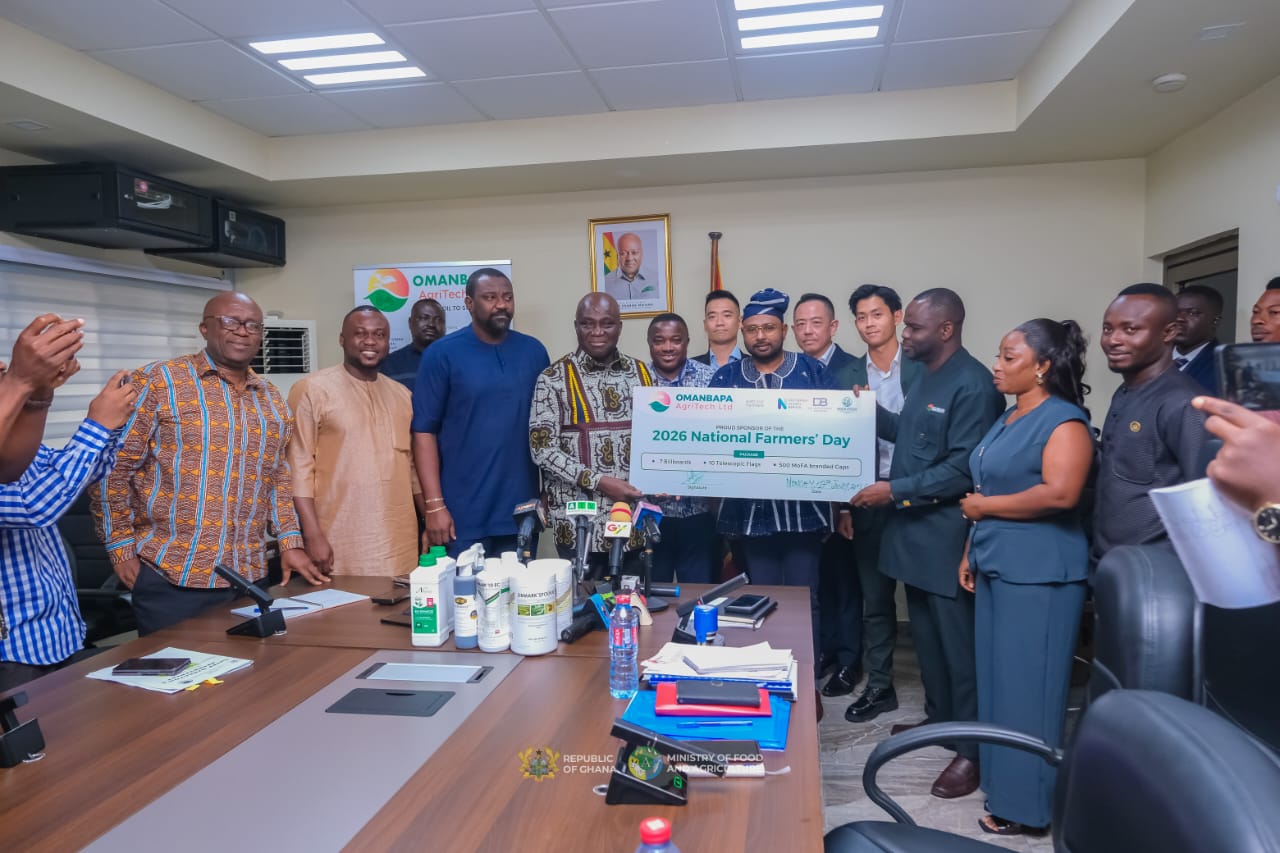
The Minister for Food and Agriculture, Eric Opoku, has reiterated the government’s concern about the deteriorating health of Ghana’s soils and the safety of food produced for public consumption, as the Ministry moves to gradually shift the country from inorganic to organic fertiliser use.
“We are concerned about the health of the soil. We want to protect the soil health for future production. We are also concerned about the safety of the food that we put on the market for the Ghanaian people to consume. Based on this, we are looking at how we can gradually transition from the use of inorganic or synthetic fertilisers to organic fertiliser,” he said.
He made the statement at the signing of a Memorandum of Understanding (MoU) between the Ministry and Omanbapa AgriTech Limited to establish an organic fertiliser processing plant in Ghana.
The agreement was signed on Monday in Accra, as part of the government’s efforts to promote private sector investment under the Agriculture for Economic Transformation Agenda (AETA).
The Minister explained that the organic fertiliser underwent rigorous testing by the Plant Protection and Regulatory Services Directorate (PPRSD) and was also trialled by farmers.
He said both the technical assessment and farmers’ feedback confirmed the product’s effectiveness in improving crop production, paving the way for its commercial production in Ghana.
He disclosed that the project will begin with the installation of a blending facility before expanding into a full-scale processing plant to manufacture organic fertiliser locally for both the domestic and regional markets.
The Minister reaffirmed the Ministry’s commitment to working with the private sector to achieve Ghana’s food security objectives, noting that agriculture remains private sector-led.
“We have a mandate to ensure that Ghana attains food security, and that mandate cannot be achieved single-handedly by the Ministry. Ghana’s agriculture is entirely private sector-led, so we are ever willing to partner with you to ensure that we achieve our aims together,” he stated.
Chief Executive Officer of Omanbapa AgriTech Limited, Mr Bernard Oduro-Takyi, said the company and its Malaysian partners are committed to supporting Ghana’s agricultural transformation through the production of high-quality organic fertiliser using agricultural waste as raw material.
He noted that the project will create additional income opportunities for farmers while promoting environmental sustainability.
The partnership is expected to strengthen Ghana’s organic fertiliser industry, promote climate-smart agriculture, create employment opportunities and contribute to increased agricultural productivity and national food security.
Adwoa Koramah Anokye-Gyimah, ISD