NACOC, Postal Regulator Strengthen Ties to Curb Drug Trafficking
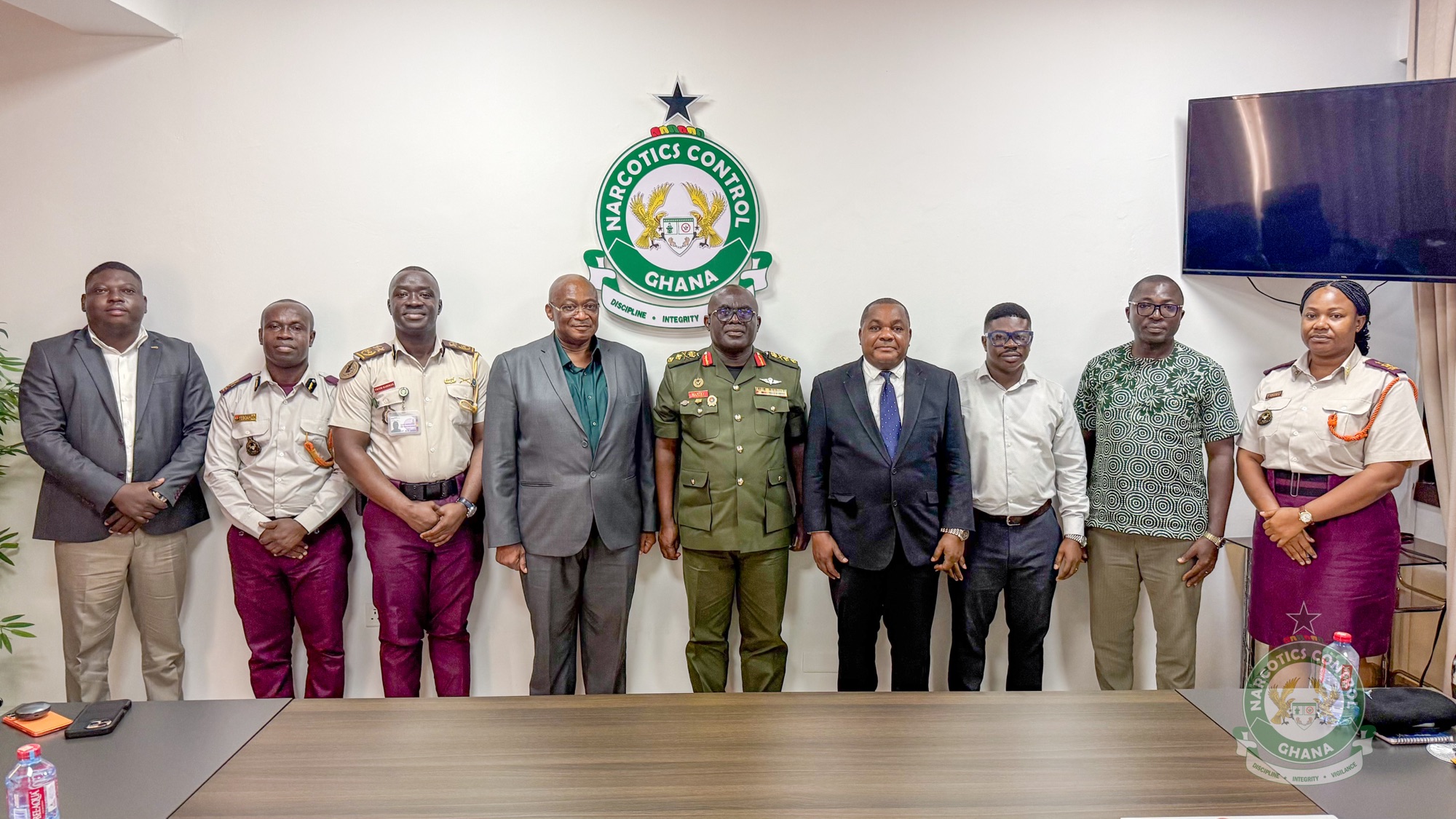
The Narcotics Control Commission (NACOC) has renewed its collaboration with the Postal and Courier Services Regulatory Commission to strengthen security and prevent the trafficking of illicit drugs through Ghana’s postal and courier services.
The partnership is expected to improve intelligence sharing, technical support, staff training and operational monitoring to prevent traffickers from exploiting courier and postal networks to transport narcotic substances.
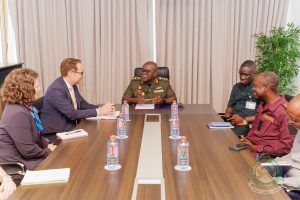
The Director-General of NACOC, Major General Maxwell Obuba Manteyre, reaffirmed the Commission’s commitment to working with relevant stakeholders to combat drug trafficking when the Acting Executive Secretary of the Postal and Courier Services Regulatory Commission, Mr Cosmas Anpengnuo, and his management team paid a working visit to him on Tuesday.
He said NACOC was ready to provide strategic support to the regulatory body to strengthen its capacity to detect and prevent illicit drug movements through the postal and courier sector.
“NACOC is ever ready to provide strategic support to the Postal and Courier Services Regulatory Commission in diverse ways, mainly to enable it to achieve its goals. The support would be directed in the form of technical, training and intelligence gathering,” he said.
Major General Mantey also called for strengthened staff vetting procedures among courier and postal service providers to ensure that employees’ backgrounds were properly checked.
He said the measure would help operators identify potential risks within their workforce and reduce opportunities for criminal networks to exploit the sector.
The NACOC Director-General expressed concern about the increasing use of digital platforms and technology by drug traffickers to facilitate their activities, warning that some courier and postal service providers could be unwittingly drawn into illicit operations.
He said drug trafficking involved interconnected networks rather than isolated individuals, requiring coordinated and professional responses from law enforcement agencies and industry regulators.
Major General Mantey urged the regulatory body to strengthen operational measures, particularly parcel verification and monitoring, to help identify suspicious consignments and protect service providers from becoming conduits for illicit drug trafficking.
He said closer cooperation between the two institutions was necessary to improve the detection of suspicious activities and contribute to national efforts to combat the drug trade.
Mr Anpengnuo, on his part, commended NACOC for its commitment to the partnership, saying the regulatory body was implementing measures to improve traceability and monitoring across the postal and courier services sector.
He said the Commission had enhanced its traceability mechanisms to ensure that the activities of courier and postal operators were closely monitored.
Mr Anpengnuo said the introduction of an Application Programming Interface (API) integration platform, to which courier and postal service companies had been connected, had also improved the Commission’s operational oversight.
The platform enabled the Commission to track delivery activities and identify the parties involved in consignments handled by service providers daily, he said.
He added that courier and postal service providers that failed to comply with the API integration requirements would not have their licences approved or renewed.
Judith Twumwaa, ISD