NAS CEO Calls for Emergency Care Act, National Bed Tracking System to End ‘No Bed Syndrome’
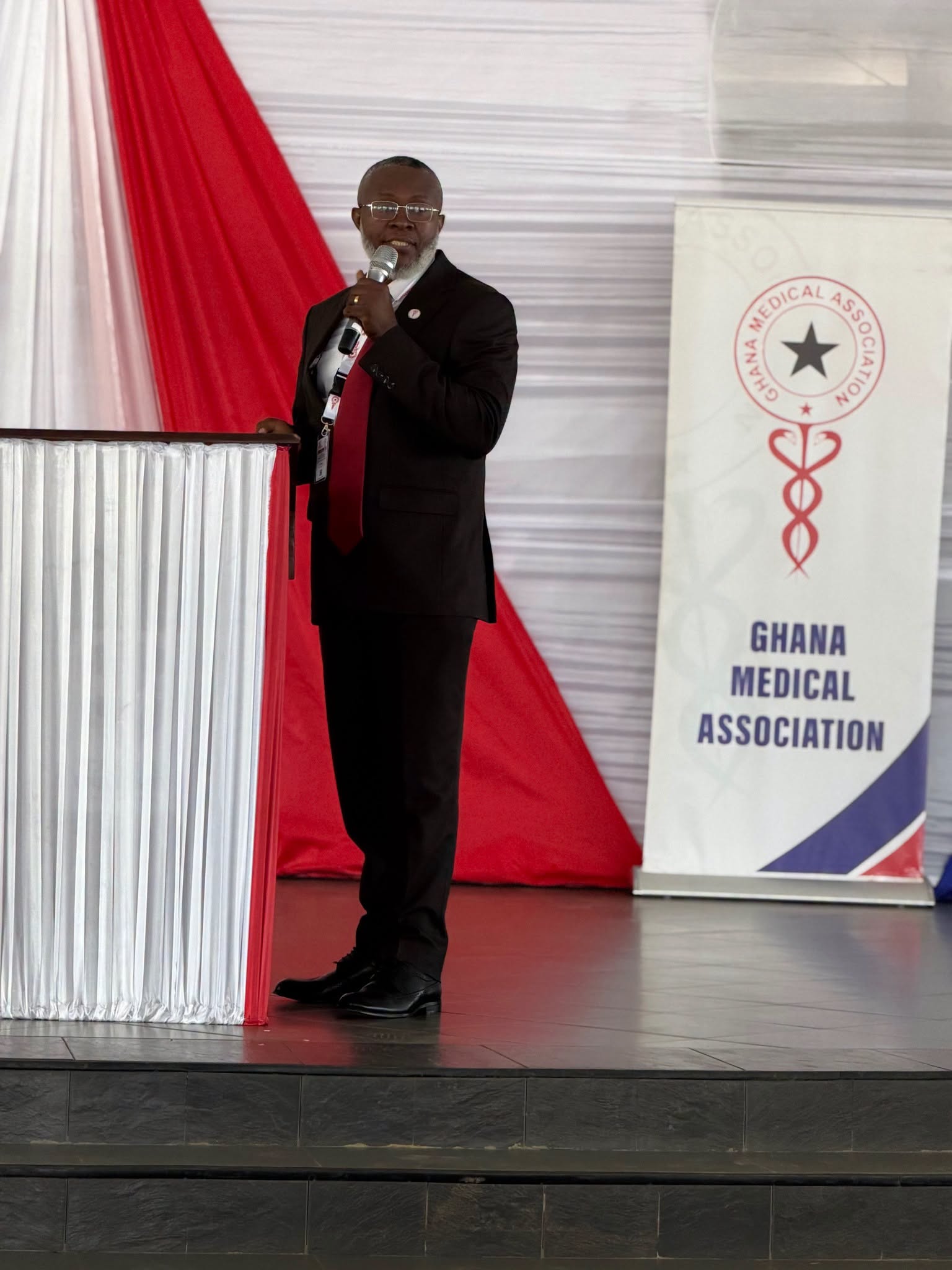
The Chief Executive Officer of the National Ambulance Service (NAS), Dr. (Med) George Kojo Owusu, has called for far-reaching reforms in Ghana’s emergency healthcare system, including an Emergency Care Act and a real-time national bed-tracking system, to address the persistent “No Bed Syndrome”.
He said ending the problem required more than administrative directives, stressing the need for a well-coordinated, adequately funded and legally supported emergency response system that ensured patients received timely assessment and treatment.
Dr. Owusu made the call on Thursday, when he delivered the keynote address at the Scientific Session of the 68th Annual General Conference of the Ghana Medical Association (GMA) Central University, Miotso.
The conference is being held on the theme: “The No Bed Syndrome — Reimagining a Befitting Emergency Response System for Ghana.”
He explained that the problem extended beyond the shortage of hospital beds, pointing to wider weaknesses in emergency infrastructure, referral systems, healthcare financing, workforce capacity and information management.
To illustrate the human cost of these challenges, he recounted the death of 29-year-old engineer Charles Henry Amissah, who three hospitals reportedly turned away after being stabilised by NAS personnel following a hit-and-run accident at the Circle Overpass on February 6, 2026.
Dr. Owusu described the incident as a painful reminder of the failures within the country’s emergency care system, insisting that lasting solutions must replace repeated administrative instructions.
“A directive is not a system,” he said, calling for practical and sustainable measures to prevent similar tragedies.
The NAS CEO said Ghana’s emergency healthcare capacity remained under pressure, citing an estimated 0.7 hospital beds per 1,000 people, compared with the World Health Organisation’s recommendation of five beds per 1,000 people.
He also identified inadequate intensive care capacity, shortages of skilled personnel, maternal deaths, road traffic injuries and poor referral coordination as major challenges requiring urgent attention.
To address these gaps, he proposed seven interventions, beginning with a National Emergency Bed Census to provide real-time information on the availability of hospital beds, intensive care units (ICUs), high-dependency units (HDUs), ventilators and operating theatres in public and accredited private health facilities.
He also called for the transformation of the existing 112 emergency number into an Integrated Emergency Dispatch and Referral Centre, linking ambulance services to hospitals with available capacity to improve patient transfers and referrals.
On critical care, he proposed doubling the country’s functional ICU capacity by 2030, alongside increased training of specialists and critical care personnel.
He further advocated universal emergency triage to ensure that patients were promptly assessed using standardised protocols, as well as the establishment of regional referral networks across all 16 regions to ease pressure on major hospitals in Accra and Kumasi.
Dr. Owusu emphasised the need for sustainable funding for ambulance operations, including fleet maintenance, fuel supply, emergency medical technician (EMT) welfare and response capacity at accident scenes.
He said NAS was also working to integrate its digital applications into the ghana.gov platform and develop a Fleet Management System to cover all 319 ambulance stations and five regional workshops.
Another major proposal was the enactment of an Emergency Care Act to guarantee emergency assessment and stabilisation, prevent healthcare facilities from demanding payment before emergency assessment and ensure accountability for unjustified refusal of emergency patients.
He proposed that the Ghana Medical Association(GMA) issue a formal position statement in support of an Emergency Care Act and work with the Ghana College of Physicians and Surgeons to incorporate emergency life-support and triage training into continuous professional development for health professionals.
Dr. Owusu said the success of the proposed reforms should ultimately be measured by whether patients could access timely assessment, stabilisation and appropriate care without being abandoned because of institutional failures or poor coordination.
Grace Acheampong, ISD