President Mahama Calls for Sustainable African Financing of Peace and Security
President John Dramani Mahama has called on African leaders to establish a sustainable, predictable and African-owned financing system for the continent’s peace and security agenda, saying lasting conflict prevention depends on timely and reliable resources.
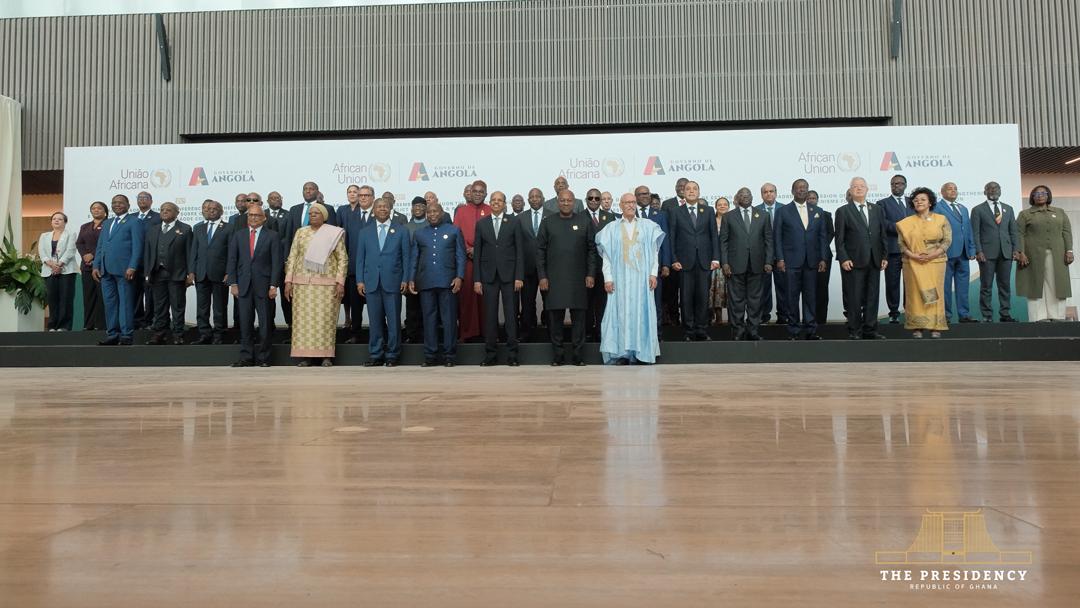
President Mahama made the call at the 21st Extraordinary Session of the Assembly of Heads of State and Government of the African Union in Luanda, where leaders gathered to adopt a continental action plan and implementation framework for conflict prevention and resolution.
Addressing the summit, the President said Africa already possessed comprehensive peace and security mechanisms, but their effectiveness depended on better implementation, stronger coordination and adequate financing.
“Early warning must translate into early action, and early action requires resources that are available in a timely and predictable manner,” he stated.
President Mahama said Ghana attached particular importance to strengthening African ownership of peace and security financing to reduce excessive dependence on external support.
He stressed that conflict prevention should be embedded within Africa’s broader development agenda, with early warning systems identifying not only imminent threats but also the underlying grievances that fuel instability.
The President welcomed the Luanda Action Plan, its implementation matrix and the African Union Trigger Model, describing them as important instruments for improving the continent’s response to emerging conflicts.
He urged member states to ensure that commitments adopted at the summit were backed by clear responsibilities, measurable indicators, realistic timelines and credible financing arrangements.
“We have spoken on this topic for too long, and it is time for us to move from words to action,” he said.
President Mahama reaffirmed Ghana’s commitment to building an African peace and security architecture that is effective, adequately resourced and firmly anchored in African ownership.
Richard Aniagyei, ISD