Cocoa Farmers will Receive At Least 70% Of World Market Price – President Mahama
Cocoa farmers in Ghana are guaranteed at least 70 percent of the realised world market value of their produce, with the current producer price representing 71.18 percent of the realised gross Free-on-Board (FOB) value for the 2026/2027 cocoa season.
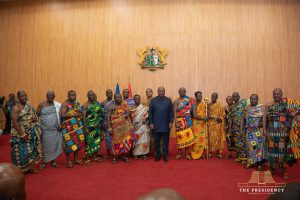
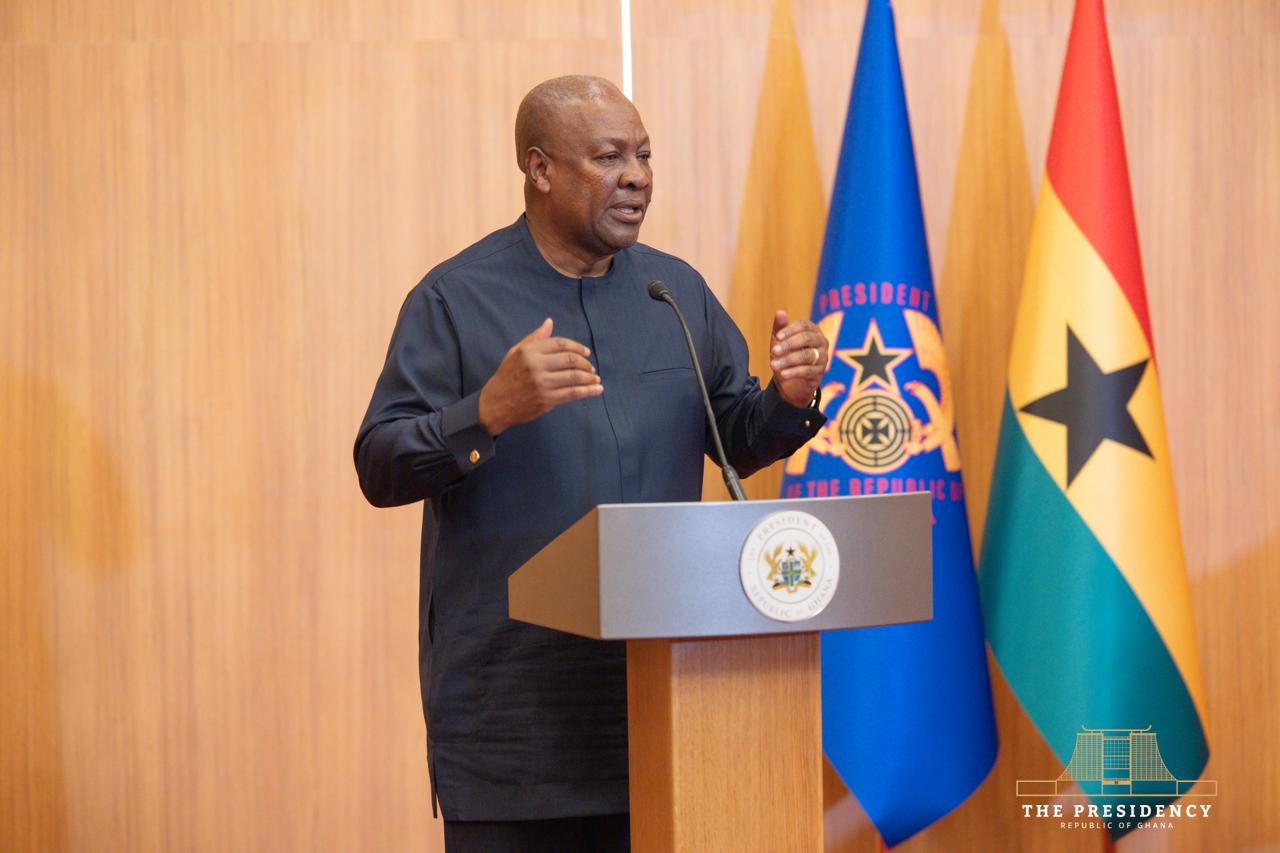
President John Dramani Mahama reiterated the government’s commitment to ensuring that cocoa farmers receive a fair share of the value of their produce during his engagement with chiefs of the Western North Region at the Presidency in Accra.
“Let me be clear: we will honour our promise to pay our hardworking farmers 70 per cent of the world market price of cocoa. The sweat of our cocoa farmers deserves dignity and a fair reward,” President Mahama stated during a durbar in Juaboso in July 2025, reaffirming his administration’s commitment to improving returns to farmers.
The guarantee is now backed by the Ghana Cocoa Board Act, 2026 (Act 1182), which provides that cocoa farmers must receive a minimum of 70 per cent of the realised gross FOB price.
The law forms part of reforms intended to strengthen the cocoa sector’s financial position, improve returns to farmers and establish a more sustainable framework for managing the industry.
For the 2026/2027 season, the producer price has been set at GH¢42,400 per tonne, equivalent to GH¢2,650 for a 64-kilogramme bag. According to the Ghana Cocoa Board (COCOBOD), the price represents 71.18 per cent of the realised gross FOB value and took effect on September 25, 2026. This is an increase from GH¢41,392 per tonne in the previous season.
The pricing arrangement is intended to ensure that farmers benefit directly from the value generated by their produce on the international market.
Linking the producer price to the realised FOB value also establishes a clearer basis for determining the share payable to farmers, rather than treating the producer price as a figure disconnected from cocoa export earnings.
Beyond pricing, government is continuing productivity-enhancement programmes to help farmers increase output and reduce production costs. T
hese include the distribution of free fertiliser and hybrid cocoa seedlings, as well as the Cocoa Disease and Pest Control Programme.
Such interventions are intended to improve yields and support farmers’ incomes alongside the guaranteed share of the export value.
The reforms also address the protection of cocoa farms from illegal small-scale mining and the need to increase domestic value addition.
COCOBOD has indicated that the new framework is intended to strengthen the industry’s financial and institutional foundations while improving transparency and supporting a sustainable cocoa value chain.
Western North is among Ghana’s important cocoa-producing areas, making producer prices and farm productivity important concerns for farmers and their communities.
Improved returns can help farming households meet production expenses and support their families, while investment in seedlings, fertiliser and disease control can contribute to higher yields.
Richard Aniagyei, ISD