National Ambulance Service’s CEO Engages Adidome Staff on Fleet Maintenance, Career Progression
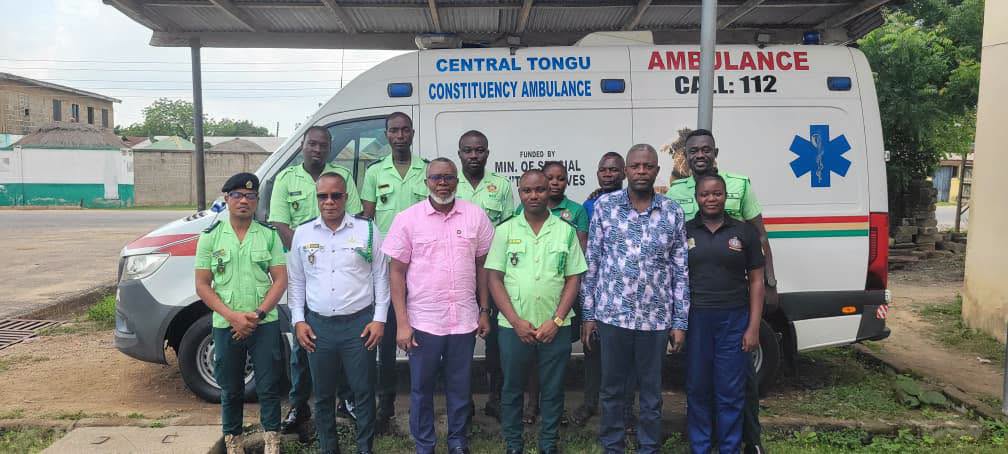
The Chief Executive Officer of the National Ambulance Service (NAS), Dr (Med) George Kojo Owusu, has engaged local authorities to secure support for ambulance maintenance, to keep its fleet operational and improve emergency response across the country.
This was during an engagement with personnel at the Adidome Ambulance Station in the Volta Region, where staff raised concerns about operational challenges, career development and welfare.
The meeting formed part of his ongoing working tour to assess operational needs, strengthen collaboration with frontline personnel and improve pre-hospital emergency care delivery.
Dr Owusu said Management was already engaging Municipal Chief Executives (MCEs) to build stronger local partnerships and secure assistance for maintaining ambulances to ensure their continued availability for emergency duties.
On service expansion, he disclosed that the Ministry of Health planned to procure 100 additional ambulances in 2027, alongside efforts to establish new ambulance stations to extend access to emergency medical services.
The CEO also addressed staff concerns about professional advancement, including a proposal to upgrade certificates awarded by the Pre-Hospital Emergency Care Training School (PECTS) to degree-level qualifications with wider academic and professional recognition. He further highlighted the possibility of reviewing the Scheme of Service to improve career progression opportunities for Emergency Medical Technicians (EMTs).
As part of staff capacity-building efforts, AEMT training for EMTs in Batches Four, Five and Six was scheduled for January, while refresher training for Community-based First Responders (CMFRs) was also planned to strengthen their emergency response skills.
Staff welfare issues, including support for NAS personnel involved in road traffic accidents, also featured in the discussions. The proposed introduction of new Deputy Directors was raised as part of broader considerations around the Service’s management structure and institutional development.
The engagement forms part of NAS’s efforts to address operational challenges, improve staff development and strengthen the delivery of timely and effective pre-hospital emergency care across Ghana.
Grace Acheampong, ISD