President Mahama joins National General Cleaning Exercise across Accra Metropolis
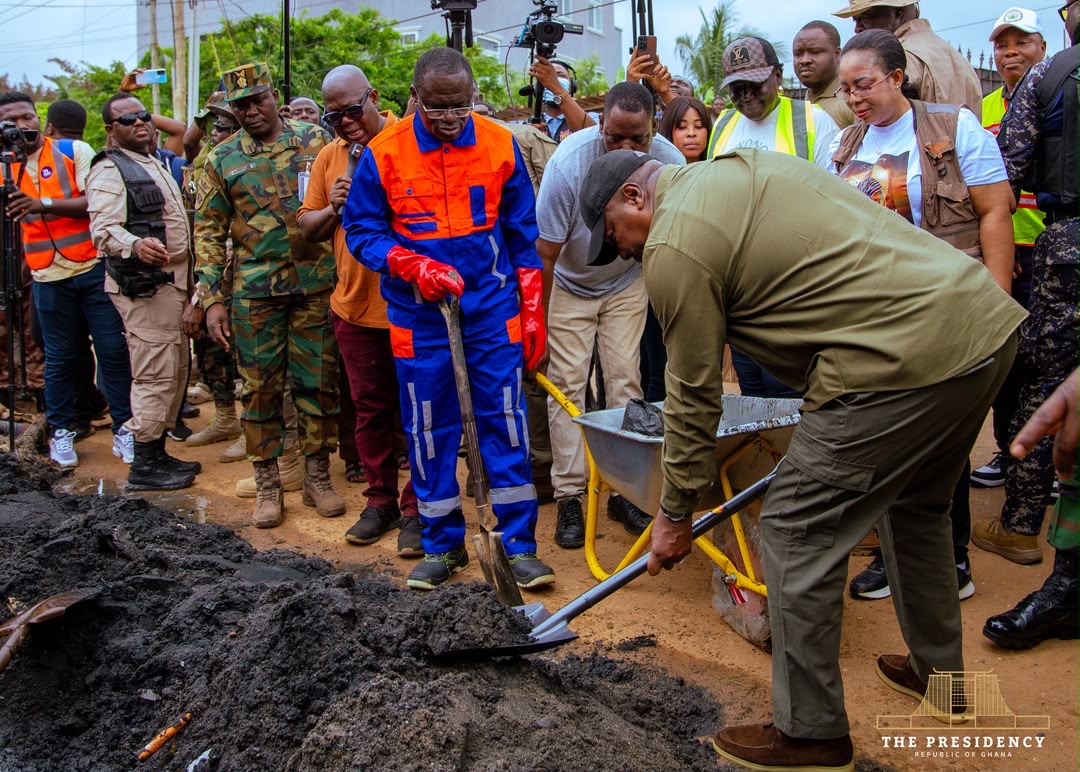
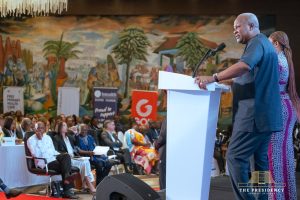
President John Dramani Mahama participated in the National General Cleaning Exercise, joining citizens at various locations across the Accra Metropolis to support efforts aimed at improving environmental sanitation and public health.
The exercise reflects Government’s commitment to promoting a cleaner, healthier and more sustainable Ghana through collective civic responsibility.
At Tse Addo, President Mahama inspected a newly desilted drain, pointing to the volume of plastic waste removed from it as evidence of the cause of some of the flooding challenges the country faces.
“Clearly, we can see the cause of some of the challenges we face. We have just desilted this drain, and the amount of plastic waste removed from it tells the story,” he observed.
He said the quantity of sand and silt found in the drain showed that the build-up had accumulated over several years, reducing the drain’s capacity to carry water effectively.
He noted that in past cleanup exercises, silt removed from drains had often been left by the roadside, only to be washed back in when the rains came.
“As part of this exercise, we must ensure that after removing the silt, we have the necessary capacity to transport it away and dispose of it at appropriate locations,” he said, adding that consistent effort over the next year or two would restore the drains’ capacity to carry water.
President Mahama commended residents for their turnout, saying he had moved around the city and witnessed the commitment shown by participants.
He said the military and other security services would continue dredging major waterways after the exercise to ensure drains had proper outlets into the wetlands.
He stressed that the cleanup should not be a one-time activity but a continuous national effort, with at least one day set aside every month for communities to clean their surroundings.
At Alajo, President Mahama said the recent floods had been devastating, but Ghana needed to demonstrate that it was a resilient nation capable of recovering and emerging stronger.
He cautioned against complacency, saying the country must not behave like the vulture that plans to repair its roof only after the rains have stopped.
“We must act now. That is why it is important that we clear our drains and waterways,” he stressed.
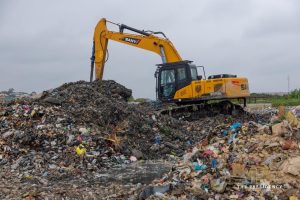
He said the desilted drain at Alajo, which forms part of the Odaw stream, had revealed two major challenges, the accumulation of silt and the presence of plastics and household waste, including discarded building materials, old furniture and dining tables.
Such findings, according to the President called for a change in attitude toward waste disposal, stressing that drains were not dumping grounds and that residents should make use of skip containers placed across the city for proper collection by waste management companies.
President Mahama disclosed that the Minister of Finance had released GH¢150 million to support dredging of streams and other interventions to address flooding, and said the Armed Forces would continue the exercise even after the two-day national cleanup programme ended.
He said government would provide additional backhoes to the military to help remove silt from drains and transport it to approved disposal sites, warning that without proper disposal, the same silt and garbage would be washed back into the drains when the rains returned.
President Mahama attributed some of the current sanitation challenges to the pressures of urbanisation, noting that traditional values around keeping the environment clean had, in some cases, been abandoned as a result of the anonymity that comes with city life.
He called for a restoration of that discipline, and commended Nii Ga and other traditional leaders for their support in mobilising residents for the exercise.
Richard Aniagyei, ISD